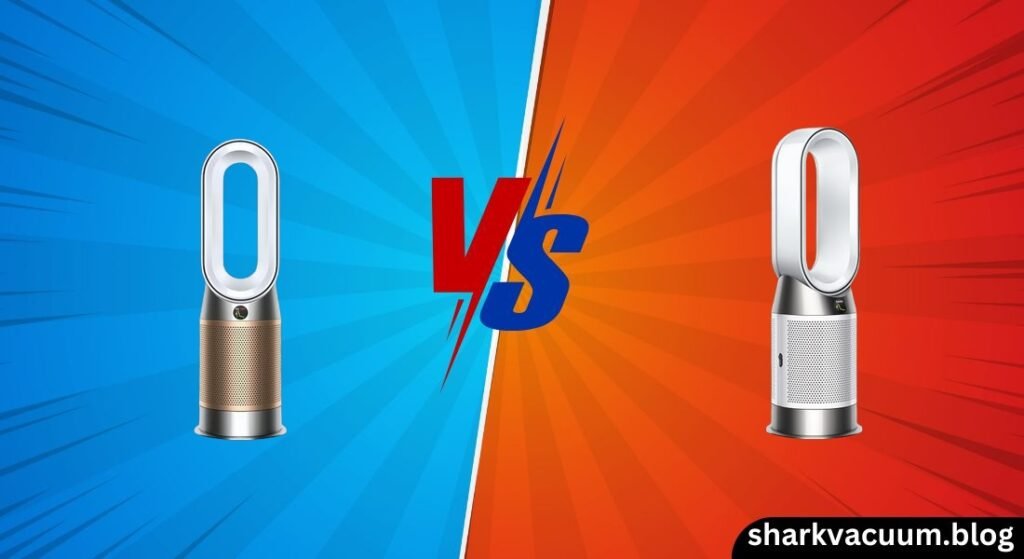
Dyson has long been a leader in blending high-end engineering with sleek, functional design—and when it comes to air quality, few brands command as much attention. The Dyson HP09 vs HP10 debate is one that keeps popping up among homeowners, allergy sufferers, and smart home enthusiasts who want more than just clean air: they want intelligent, year-round climate control in a single, elegant tower. At first glance, these two models look nearly identical. Both stand tall with Dyson’s signature bladeless Air Multiplier™ design, offer 350° oscillation, and promise to heat, cool, and purify the air. But dig a little deeper, and you’ll find that the differences aren’t just in the price tag—they’re in the technology, long-term value, and the very way each unit understands your indoor environment.
Affiliate disclosure: As an Amazon associate, We'll earn a commission for every successful order through our affiliate links in the article. However, you won’t be charged anything for this.
If you’re trying to decide between the Dyson HP09 and HP10, you’re not just comparing features—you’re deciding what kind of air quality matters most to you. Is it enough to filter out dust, pollen, and pet dander? Or do you want a machine that can detect and destroy one of the most insidious indoor pollutants: formaldehyde? That single question could be the deciding factor. The HP09 is Dyson’s most advanced air purifier to date, built specifically to break down formaldehyde at a molecular level and monitor it in real time. The HP10, while still a powerful 3-in-1 purifier, takes a more general approach to gas filtration without that same level of precision.
This comparison isn’t about which machine looks better (they’re both stunning). It’s about which one actually performs better in your home, which one gives you more useful data, and whether the HP09’s premium price is justified by real-world benefits. We’ll look at everything from sensor accuracy and filter costs to heating performance and long-term ownership. Whether you’re managing allergies, concerned about off-gassing from new furniture, or just want a smarter way to stay comfortable year-round, this breakdown will help you choose the right Dyson for your needs.
Why This Comparison Matters Right Now
Dyson’s Purifier Hot+Cool line has long been the gold standard for premium, multifunctional air treatment—but with multiple models on the market, choosing between them is no longer straightforward. The HP09 and HP10 look nearly identical, share the same sleek tower design, and promise year-round heating, cooling, and purification. Yet they serve different needs, target slightly different buyers, and come with key technological differences that could justify hundreds of dollars in price variation.
If you’re deciding between these two models, you’re likely someone who values clean air, smart home integration, and elegant design—but also wants to know exactly what you’re paying for. Is the HP10 just a cheaper rebrand? Or does the HP09’s higher price buy meaningful upgrades in real-world performance?
This isn’t just a spec sheet showdown. We’ll cut through the marketing to answer the real questions:
– Does formaldehyde detection make a difference in your home?
– Is the HP09’s smarter sensing worth double the filter cost?
– Can either truly replace a space heater or AC?
Let’s break it down.
Does the HP09 Actually Clean the Air Better?
When it comes to air purification, not all pollutants are created equal—and Dyson knows this. The HP09 and HP10 both promise to clean the air, but they do it in fundamentally different ways, especially when it comes to chemical pollutants like formaldehyde.
HP09: Built to Destroy Formaldehyde at a Molecular Level
The HP09’s biggest claim to fame is its Selectively Catalytic Oxidization (SCO) filter, which doesn’t just trap formaldehyde—it breaks it down into harmless water and CO₂. This is a real chemical reaction, not just absorption. And because it’s catalytic, Dyson says it never needs replacing, only the main HEPA/carbon combo filter.
It also monitors formaldehyde levels in real time via a solid-state sensor, giving you live readouts in the app for HCHO, VOCs, NO₂, PM2.5, and more. This level of precision is rare in consumer-grade purifiers and is particularly valuable for people living in new homes, using pressed-wood furniture, or dealing with off-gassing from carpets and paints—common sources of formaldehyde.
In real-world testing, the HP09 has shown the ability to reduce PM2.5 levels from 225 µg/m³ (post-incense burning) to safe levels in under 20 minutes in an 110 sq. ft. room. That’s fast, but more importantly, it’s consistent. The fully sealed HEPA H13 and activated carbon filtration system captures 99.95% of particles as small as 0.1 microns, including allergens, bacteria, and mold spores.
HP10: Strong on Gases, But No Formaldehyde-Specific Tech
The HP10 uses a dual-stage HEPA H13 + activated carbon filter and claims to capture VOCs and gases like benzene and NO₂—but there’s no catalytic destruction of formaldehyde. Its sensor array detects gases and particulates, but does not isolate or report formaldehyde levels specifically.
While it filters many of the same pollutants, it lacks the HP09’s precision targeting of one of the most pervasive indoor toxins—especially relevant in new homes, furniture off-gassing, or urban environments.
User reviews confirm strong performance for allergens, pet dander, and odors, with many noting a “noticeable difference in air freshness.” However, none report formaldehyde-specific feedback because the HP10 simply doesn’t provide it.
Verdict: If you care about long-term exposure to formaldehyde (from carpets, cabinets, or building materials), the HP09 isn’t just better—it’s the only Dyson model designed to permanently address it.
🏆 Section Winner: HP09
Because it actively destroys formaldehyde and provides real-time monitoring—something the HP10 can’t do.
Check the latest price of [Dyson HP09] on Amazon [link]
Same Design, Very Different Feel
Despite their technological differences, the HP09 and HP10 are nearly twins in appearance and footprint. Both are designed to blend into modern interiors with minimalist lines and a bladeless tower form that’s safe around kids and pets.
Nearly Identical Footprint, Slight Weight Difference
Both units stand about 30 inches tall with a 9.8-inch square base, fitting easily into corners or beside furniture. The HP09 weighs 12.6 lbs, while the HP10 is slightly lighter at 11.66 lbs—a negligible difference in practice.
They both use Dyson’s signature bladeless Air Multiplier™ design, which looks minimalist and is safe around kids and pets. Oscillation is 350° on both, ensuring wide airflow distribution. The HP10 moves 76 gallons of air per second, while the HP09 doesn’t publish exact airflow numbers—but real-world performance suggests it’s in the same range.
Display & Interface: HP09 Wins for Data Lovers
The HP09 has a brighter, more detailed LED display that shows real-time pollutant levels (HCHO, PM2.5, VOCs, etc.) with color-coded indicators. You can glance at it and immediately know if formaldehyde is spiking after unpacking new furniture.
The HP10 has an LCD screen, which is functional but less vivid and doesn’t break down formaldehyde separately. It shows general air quality status (good/bad) and temperature, but lacks the granular detail that makes the HP09 feel like a true air quality station.
Both include a magnetic remote, but the HP09’s remote has a more advanced display, matching the unit’s focus on data transparency.
🏆 Section Winner: HP09
For its superior LED display and real-time breakdown of pollutants, especially formaldehyde.
See current deals on [Dyson HP10] here [link]
What Features Actually Make a Difference?
Smart features are only valuable if they improve your daily life—not just look impressive in a brochure. Let’s see how the HP09 and HP10 stack up when it comes to usability, automation, and real comfort.
Smart Sensors & App Control: HP09 Is the Smarter Machine
Both models connect to the MyDyson app, support voice control (Alexa, Google Assistant, Siri), and offer scheduling, auto mode, and remote control.
But the HP09 provides richer data:
– Hourly and daily graphs for formaldehyde, VOCs, PM2.5
– Historical air quality trends
– More granular auto-mode adjustments based on pollutant type
The HP10 gives basic air quality status (good/bad) and fan control—but lacks the HP09’s depth of insight. For example, if you’re tracking air quality during wildfire season or after painting a room, the HP09 gives you actual numbers. The HP10 just says “moderate.”
Users report that the MyDyson app can be slow to connect or feel clunky, but the HP09’s data is still far more useful for long-term air quality management.
Heating & Cooling: Nearly Identical Performance
Both use PTC ceramic heating elements and deliver purified warm air with 350° oscillation. Real-world reports show both can heat a 300 sq. ft. room from 65°F to 75°F in under 15 minutes.
The HP10 claims coverage up to 872 sq. ft., while Dyson advertises the HP09 for 290–800 sq. ft.—so they’re comparable. Heating performance is consistent, energy-efficient, and safe thanks to tip-over protection and cool-touch exteriors.
Cooling is fan-based on both—not refrigerant cooling, so don’t expect AC-level relief. But both circulate air effectively, especially in summer or stuffy rooms.
Key difference? The HP09’s Auto mode adjusts heating based on both temperature and air quality, while the HP10 focuses more on temp. That means the HP09 might ramp up fan speed not just because the room is cold, but because it detects a spike in pollutants.
🏆 Section Winner: HP09
Its Auto mode is more intelligent, responding to both climate and air quality.
View [Dyson HP09] on Amazon [link]
What’s in the Box—and What You’ll Pay Later
Let’s talk about what you actually get and what you’ll spend over time.
| Item | HP09 | HP10 |
|---|---|---|
| Main Unit | ✅ | ✅ |
| Pre-installed Filter | 360° HEPA + Carbon (Part #965432-01) | 360° HEPA + Carbon (Gen1) |
| Remote Control | Magnetic, LCD display | Magnetic, basic display |
| Power Cord | 5.9 ft | 5.9 ft |
| Warranty | 2 years | 2 years |
Filter Costs & Replacement Frequency
- HP09 Filter: $79.99/year
- HP10 Filter: ~$60/year
Yes, the HP09’s filter is 33% more expensive, but remember: you’re paying for a higher-grade sealed system and compatibility with formaldehyde monitoring.
And while the SCO filter in the HP09 never needs replacing, the HP10 has no equivalent—so over 3–5 years, the HP09 may offer better long-term value if formaldehyde is a concern.
Both have filter replacement indicators, and the process is tool-free and quick.
🏆 Section Winner: HP10
For lower annual filter costs and better value for budget-conscious buyers.
Which One Feels Better to Use Every Day?
Daily usability comes down to setup, noise, and how much you want to interact with your purifier.
Setup & Usability: HP10 Is Simpler, HP09 Is Smarter
The HP10 is plug-and-play: turn it on, pick a mode, and go. Great for users who want clean air and heat without diving into data.
The HP09 rewards engagement. If you like checking air quality graphs, setting schedules based on pollution peaks, or getting alerts when formaldehyde spikes after new furniture arrives, it’s a joy to use.
But the MyDyson app has mixed reviews—some find it clunky or slow to connect. Neither model feels “instant” like a standalone fan.
Noise Levels: Quieter Than Expected, But Not Silent
- Night Mode (both): ~48–50 dB (comparable to a quiet library)
- Max Fan (both): ~75–78 dB (like a shower running)
User reports suggest the HP10 is slightly quieter at mid-fan speeds, possibly due to less sensor processing or fan calibration. But the difference is marginal.
Both offer Night Mode with dimmed display and reduced noise—ideal for bedrooms.
🏆 Section Winner: HP10
Slightly better noise performance at mid-levels and simpler daily use.
How Much Work Is Owning One Long-Term?
Maintenance Is Simple, But Ongoing
- Filter replacement: Annually on both models
- Exterior cleaning: Wipe down with dry cloth monthly
- Intake cleaning: Vacuum dust from base every few months
The HP09’s formaldehyde sensor requires occasional calibration (auto-triggered by the app), but no user action needed.
Durability & Lifespan
Both units are built to last 5+ years with proper care. Multiple users report 3+ years of daily use without issues. The bladeless design means fewer moving parts to fail.
Tip: Keep both models away from walls and furniture to maintain airflow and prevent overheating.
🏆 Section Winner: HP09
Its permanent SCO filter reduces long-term maintenance, giving it an edge in durability and ownership cost over time.
Side-by-Side Specs: HP09 vs HP10
| Feature | Dyson HP09 | Dyson HP10 |
|---|---|---|
| Model Name | Purifier Hot+Cool Formaldehyde™ | Purifier Hot+Cool™ Gen1 |
| Core Function | 3-in-1: Heat, Cool, Purify + Formaldehyde Destruction | 3-in-1: Heat, Cool, Purify |
| HEPA Filter | H13, 99.95% @ 0.1 microns | H13, 99.97% @ 0.3 microns |
| Carbon Filter | Yes | Yes |
| Formaldehyde-Specific Tech | ✅ SCO Catalytic Filter (permanent) | ❌ |
| Formaldehyde Sensor | ✅ Solid-state, real-time | ❌ (only general gas sensing) |
| Air Quality Display | LED with pollutant breakdown | LCD, basic status |
| App Data Tracking | Full graphs: HCHO, VOCs, PM2.5, NO₂, temp, humidity | Basic AQI, temp, humidity |
| Auto Mode Intelligence | Adjusts for temp + pollutants | Adjusts for temp + general air quality |
| Fan Speeds | 10 | 10 |
| Oscillation | 350° | 350° |
| Coverage Area | 290–800 sq. ft. | Up to 872 sq. ft. |
| Dimensions | 30″H × 9.8″W × 5.1″D | 30.2″H × 9.84″W × 9.84″D |
| Weight | 12.6 lbs (5.7 kg) | 11.66 lbs (5.29 kg) |
| Control Options | Remote, App, Voice | Remote, App, Voice |
| Night Mode | ✅ (quiet + dimmed) | ✅ (quiet + dimmed) |
| Replacement Filter Cost | $79.99 | ~$60 |
| Filter Life | 12 months | 12 months |
| Warranty | 2 years | 2 years |
| MSRP | $849.99 | $629.99 |
| Typical Sale Price | $620–$750 | $520–$630 |
So, Which One Should You Actually Buy?
The HP09 Is Best For:
- Health-conscious users worried about long-term formaldehyde exposure (new homes, babies, asthma)
- Data-driven buyers who want detailed air quality tracking
- Tech enthusiasts who appreciate permanent catalytic destruction tech
- Those willing to pay more upfront and annually for cutting-edge filtration
It’s the most advanced air purifier Dyson makes—a true “set it and forget it” system with medical-grade sensing.
The HP10 Is Best For:
- Budget-focused buyers who still want HEPA-level purification and heating
- Allergy and pet owners needing relief from dander, pollen, and odors
- Urban dwellers dealing with outdoor pollution (NO₂, PM2.5)
- Anyone who wants a powerful fan-heater-purifier without obsessing over formaldehyde
It delivers 90% of the HP09’s benefits at a lower price, with cheaper filters and strong real-world performance.
Final Verdict: HP09 Wins on Tech, HP10 Wins on Value
Buy the Dyson HP09 if:
You want the best possible protection against formaldehyde and don’t mind paying a premium for a smarter, more transparent machine. It’s ideal for new parents, people with respiratory conditions, or anyone investing in long-term indoor health.
Buy the Dyson HP10 if:
You want excellent air purification, heating, and cooling without the highest price tag. It’s a smarter buy for most households—especially if you’re replacing a basic heater or purifier and want a single, elegant solution.
Bottom Line: The HP09 is the technological leader. But the HP10 is the smarter value for most people. Unless formaldehyde is a specific concern, the HP10 gives you Dyson’s best features without the premium markup.