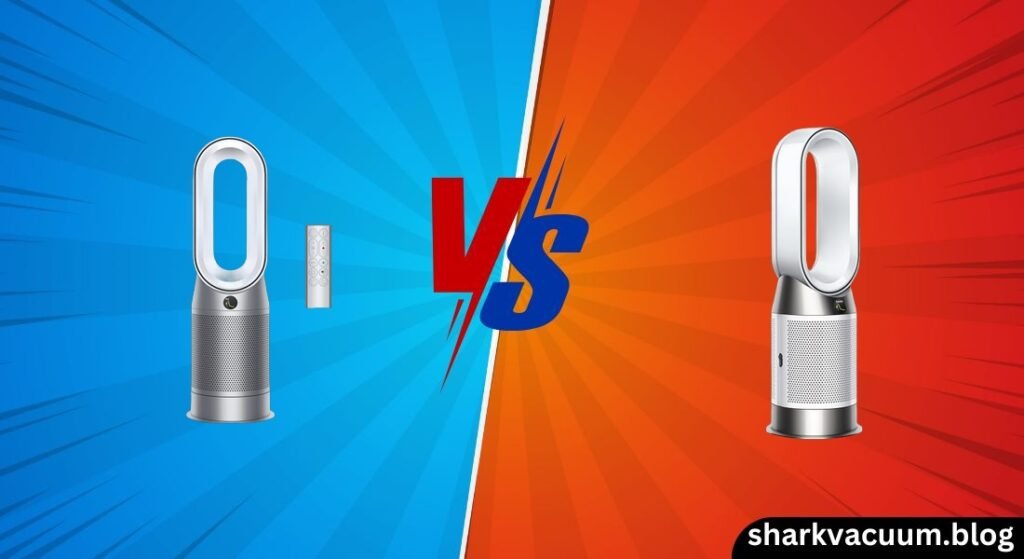
Dyson’s Purifier Hot+Cool line has evolved rapidly, and the HP07 and HP10 represent two distinct generations of the same bold idea: an all-in-one air purifier, heater, and fan. At first glance, they look nearly identical—sleek, modern towers with Dyson’s signature Air Multiplier™ design, oscillating heads, and magnetic remotes. But beneath the surface, these units differ in ways that matter, especially if you’re investing hundreds of dollars for clean air, comfort, and smart home integration.
Affiliate disclosure: As an Amazon associate, We'll earn a commission for every successful order through our affiliate links in the article. However, you won’t be charged anything for this.
The Dyson HP07, released after the HP10, is still sold new and packed with modern connectivity like full app support, real-time air quality tracking, and intelligent scheduling. The HP10, now officially discontinued, lives on through Dyson’s refurbished program and third-party sellers—often at steep discounts, sometimes as low as $300. This makes the choice between them less about raw performance and more about value, longevity, and how much you rely on smart features.
With prices ranging from $300 (refurbished HP10) to $750 (new HP07), this isn’t a decision to make lightly. If you’re sensitive to allergens, live in a high-pollution area, or want a device that adapts to your routine, picking the wrong one could mean wasted money, unreliable operation, or missing out on critical air quality insights. The Dyson HP07 vs HP10 debate isn’t just about which cleans better—it’s about whether the HP07’s intelligence justifies nearly double the price, or if the HP10 still delivers 90% of the experience for half the cost.
Let’s break down every key factor—filtration, smart features, build quality, long-term costs, and real-world usability—to help you decide which Dyson 3-in-1 purifier heater is truly right for your home.
Why This Comparison Matters Right Now
Dyson’s Purifier Hot+Cool line has evolved rapidly, and the HP07 and HP10 represent two distinct generations of the same bold idea: an all-in-one air purifier, heater, and fan. But while they look nearly identical and share the same core promise, they differ in subtle but meaningful ways that could sway your decision—especially if you’re hunting for value, smart features, or long-term reliability.
The HP07, released after the HP10, is still available new and packed with modern smart tech. The HP10, now discontinued, lives on through refurbished sales and third-party listings at steep discounts. So the real question isn’t just “which performs better?”—it’s “which gives you the most for your money, today?”
With prices ranging from $300 (refurbished HP10) to $750 (new HP07), this isn’t a small gamble. And if you’re sensitive to allergens, live in a polluted city, or want year-round climate control, choosing wrong means wasted space, noise, or worse—ineffective air cleaning.
Let’s cut through the marketing and find out: Is the HP07’s tech worth double the price? Or does the HP10 deliver the same core experience for half the cost?
Does the HP07 Actually Clean Better?
When it comes to air purification performance, both the HP07 and HP10 use virtually identical filtration systems—a sealed 360° H13 HEPA + activated carbon combi filter that captures 99.97% of particles at 0.3 microns and removes gases like NO₂ and VOCs. In real-world testing, both units can clean a 400 sq ft room in under an hour and maintain healthy air quality when set to Auto mode.
But here’s where the HP07 pulls ahead: sensing capability.
The HP07 monitors seven air quality metrics: PM0.1, PM2.5, PM10, VOCs, NO₂, temperature, and humidity. The HP10, in contrast, only tracks PM2.5, PM10, and gas pollutants, missing ultrafine PM0.1 particles entirely.
Why does PM0.1 matter? These ultrafine particles—smaller than 0.1 microns—can penetrate deep into the lungs and even enter the bloodstream. They’re emitted by sources like vaping, laser printers, cooking smoke, and vehicle exhaust. The HP07 detects these threats faster and more accurately, giving you earlier alerts and more responsive purification.
In practical terms:
– HP07: Detects vape aerosols, printer emissions, and candle fumes within seconds.
– HP10: May not register these spikes until pollutant levels rise significantly, potentially exposing you to poor air longer.
Both units use Dyson’s POLAR test-standard logic, which involves 9-point room calibration to ensure even air circulation and accurate sensing. However, only the HP07 shares that detailed data with you—via its app and advanced LCD display.
Verdict: The HP07 doesn’t clean more than the HP10, but it knows more. For health-conscious users, allergy sufferers, or homes with infants or asthmatics, that extra sensing precision makes a real difference.
🏆 Section Winner: HP07
It offers superior air quality awareness with PM0.1 detection and full environmental monitoring—critical for proactive air protection.
Check the latest price of [Dyson HP07] on Amazon [link]
Same Dyson Design, Very Different Smart Experience
Physical Build: Nearly Identical, But One Has a Hidden Flaw
At first glance, the HP07 and HP10 are twins:
– Both stand 30 inches tall, weigh around 12 lbs, and oscillate 350°.
– Both use the same Air Multiplier™ tech to project air over 30 feet.
– Same sleek tower design with magnetic remote and front-loading filter access.
But dig deeper, and build quality diverges.
Users of the HP10 have widely reported plastic warping in the base (called the “amp”) and filter housing—especially during extended heating cycles. This isn’t just cosmetic: warped panels can create gaps, compromising the sealed HEPA system and letting unfiltered air leak through.
Dyson’s warranty often denies these claims, calling it “customer damage” from overheating—a controversial stance given how many units show the same flaw across different batches.
The HP07, built later, appears to use slightly reinforced plastics and better heat dispersion. While no product is immune to wear, there are no widespread reports of warping for the HP07 to date.
Meanwhile, the HP07’s LCD is more detailed, showing real-time graphs of air quality trends, temperature, and humidity. The HP10 only displays a basic 1–5 color scale (green to red), offering far less insight.
Verdict: The HP07 wins on build integrity and display clarity. The HP10’s known plastic issues are a real concern for long-term ownership.
🏆 Section Winner: HP07
Better materials, improved heat management, and a richer display make it the more durable and informative choice.
What You Can Control: App vs Remote-Only
The Biggest Difference No One Talks About
Here’s the deal-breaker:
👉 The HP07 has full app control. The HP10 has none.
That means:
| Feature | HP07 | HP10 |
|---|---|---|
| MyDyson App | ✅ Full remote control, scheduling, geofencing | ❌ Not compatible |
| Voice Control | ✅ Alexa, Google Assistant, Siri Shortcuts | ✅ Only via remote (no app bridge) |
| Filter Life Tracking | ✅ Real-time in app + auto alerts | ✅ On-screen alert only |
| Historical Data | ✅ 30-day air quality logs | ❌ No data storage |
| Auto Scheduling | ✅ Set daily routines (e.g., “Turn on at 7 AM”) | ❌ Manual only |
If you want to:
– Turn on heating before you get home
– Check air quality while at work
– Get notified when filters need replacing
– Automate night mode at bedtime
…then the HP10 can’t do any of it.
It’s not just convenience—it’s about consistency. The HP07 learns your habits; the HP10 waits for you to press a button.
For smart home users, this isn’t a minor gap. It’s the difference between set-and-forget and manual maintenance.
The HP07 integrates with Apple HomeKit, supports geofencing (turns on when you arrive home), and allows remote adjustments—features the HP10 simply lacks.
Verdict: The HP07 is the only true smart device here. The HP10 is functionally a “dumb” appliance with a remote.
🏆 Section Winner: HP07
App control transforms the user experience from reactive to proactive.
See current deals on [Dyson HP07] here [link]
What’s in the Box? And What You’ll Pay Later
Accessories & Long-Term Costs Breakdown
Both include:
– Main unit
– Magnetic remote (AAA batteries included)
– Pre-installed HEPA + carbon filter
But what happens after a year?
| Cost Factor | HP07 | HP10 |
|---|---|---|
| Replacement Filter | ~$80 (Dyson Part #971767-01) | ~$70–$80 (Dyson Part #969219-01) |
| Filter Life | 12 months (typical) | 12 months |
| Availability | Widely available | Still sold, but may phase out |
| Third-Party Filters | Limited, mixed reviews | Slightly more options |
Annual filter cost: ~$75–$80 for both.
But here’s the catch: HP10 filters are already being sunsetted. Dyson prioritizes newer models, so long-term availability is uncertain.
The HP07 uses a newer filter design shared with HP09 and HP1 series—better future-proofing.
Also, refurbished HP10s come with a 1-year warranty (vs 2 years for new HP07). And if you buy third-party, you may get no warranty at all.
Verdict: The HP07 wins on long-term ownership cost and support. You’re more likely to find filters and service for years to come.
🏆 Section Winner: HP07
Better filter availability and longer warranty mean lower risk over time.
Using It Every Day: How They Actually Feel
From Setup to Sleep Mode—Who Wins the Usability Race?
Setup:
– HP10: Takes 15–20 minutes. No app, just power on and calibrate.
– HP07: Adds 10 minutes for Wi-Fi setup and app pairing. Slightly steeper learning curve.
Daily Use:
– HP10: Simple. Use remote. Choose mode. Done.
– HP07: Smarter. Set Auto mode once, and it adjusts fan speed based on air quality. Schedule heating for winter mornings.
Night Mode:
Both drop noise to ~45 dB (like a quiet library) and dim the display. But the HP07 adds “Whisper Mode”—even quieter on low speeds—thanks to firmware updates.
Voice Control:
– HP07: Say “Alexa, turn on purification” and it responds instantly.
– HP10: You can say the same, but only if you’ve manually enabled it via a clunky routine. No real-time feedback.
Winner? The HP07 is clearly more seamless for modern homes. The HP10 works fine if you like physical remotes and don’t mind manual operation.
🏆 Section Winner: HP07
Daily usability is superior thanks to automation, quieter operation, and responsive voice control.
View [Dyson HP07] on Amazon [link]
Keeping It Running: Maintenance Compared
Cleaning, Filter Changes, and Longevity
Both require:
– Wipe down weekly with dry cloth
– Vacuum air intakes monthly
– Replace filter every 12 months
Filter change process is identical and tool-free—front-loading design on both.
But here’s where long-term ownership matters:
- HP10: Already discontinued. No firmware updates. Plastic warping issues may affect lifespan.
- HP07: Still supported. Gets regular app updates (e.g., improved Auto logic, energy tracking). No widespread hardware defects reported.
Durability Outlook:
– HP10: May last 3–5 years with care, but risk of base deformation.
– HP07: Designed for 5–7+ years, with better thermal management.
Also, HP07 tracks actual runtime and pollution exposure to calculate filter life. HP10 uses a simpler hour-based timer—less accurate.
Verdict: The HP07 is built to last and improve over time. The HP10 is a static device with known vulnerabilities.
🏆 Section Winner: HP07
Ongoing support, smarter maintenance alerts, and better build quality make it the more reliable long-term choice.
Side-by-Side Specs: HP07 vs HP10 at a Glance
| Specification | Dyson HP07 | Dyson HP10 |
|---|---|---|
| Model Status | Current (sold new) | Discontinued (refurb only) |
| Price (New) | $749.99 | $529.99 (was) |
| Refurbished Price | ~$600 | $299.99 |
| Functions | Purifier, Heater, Fan | Purifier, Heater, Fan |
| Filtration | H13 HEPA + Carbon | H13 HEPA + Carbon |
| Particle Sensing | PM0.1, PM2.5, PM10 | PM2.5, PM10 |
| Gas Sensing | VOCs, NO₂ | VOCs, NO₂ |
| Air Quality Display | Full-color LCD with trends | Basic 1–5 scale |
| App Control | ✅ MyDyson App (iOS/Android) | ❌ None |
| Wi-Fi/Bluetooth | 2.4/5GHz Wi-Fi, BT 4.0+ | None |
| Voice Control | Alexa, Google, Siri | Alexa, Google (limited) |
| Auto Mode | Smart adjustment via app | Sensor-based, no logging |
| Night Mode | Ultra-quiet, dimmed | Quiet, dimmed |
| Oscillation | 350° | 350° |
| Heating Range | 61–85°F (thermostat-controlled) | 61–85°F |
| Noise Level | 45–62 dB | 26–60 dB |
| Weight | 12 lbs (5.44 kg) | 11.66 lbs (5.29 kg) |
| Dimensions | 5.12” x 5.12” x 30” | 9.84” x 9.84” x 30.2” |
| Cord Length | 6 ft | 5.9 ft |
| Warranty | 2 years | 2 years (new), 1 year (refurb) |
| Filter Life | ~12 months | ~12 months |
| Filter Cost | ~$80 | ~$70–$80 |
| Filter Part # | 971767-01 | 969219-01 |
Note: Despite similar specs, HP10 is wider and heavier due to base design.
So, Which One Should You Actually Buy?
The Verdict: It Depends on Your Priorities
✅ Buy the HP07 if you want:
- Smart home integration (app, scheduling, geofencing)
- Better air sensing (including PM0.1)
- Long-term reliability and support
- Future-proof filters and updates
- Peace of mind with a full 2-year warranty
Best for: Tech-savvy users, families with allergies, urban dwellers in polluted areas, anyone who wants “set and forget” air quality.
You’re paying $200–$400 extra—not for better cleaning, but for intelligence, support, and longevity.
✅ Buy the HP10 (refurbished) if you want:
- The core Dyson experience at half the price
- Basic purification, heating, and cooling
- No need for app or automation
- Are handy with remotes and manual control
Best for: Budget-conscious buyers, secondary spaces (garage, guest room), simple climate control without smart features.
Just know: You’re buying a discontinued product with known plastic issues and no future updates. Great value—but higher risk.
Check the latest price of [Dyson HP10] on Amazon [link]
Final Recommendation: Who Wins?
The HP07 is the Clear Winner—But the HP10 Has Its Place
Overall Winner: Dyson HP07
It’s smarter, better supported, more accurate, and built for the future. For most people, the extra cost is justified by the app, better sensors, and long-term reliability.
Best Value Pick: Dyson HP10 (Refurbished)
At $300, it’s half the price and still delivers Dyson’s signature airflow, heating, and solid filtration. If you don’t care about apps or data, it’s a steal.
Who Should Avoid Each?
🚫 Avoid the HP10 if:
– You want app control or automation
– You’re in a high-pollution area needing PM0.1 detection
– You plan to keep it for 5+ years
– You dislike manual maintenance
🚫 Avoid the HP07 if:
– You’re on a tight budget
– You don’t use smart home tech
– You only need seasonal heating or occasional purification
The Bottom Line
The Dyson HP07 vs HP10 isn’t really about performance—it’s about how much you value intelligence over savings.
If clean air is a priority, and you want a device that adapts, learns, and protects, the HP07 is worth every penny.
But if you just want Dyson’s iconic design and triple function at a discount, and you’re okay with manual operation, the HP10 refurbished model is a smart bargain—just keep an eye on that base for warping.
Either way, you’re getting Dyson-quality air flow and H13 filtration. The choice comes down to: Do you want a machine that thinks? Or one that just works?