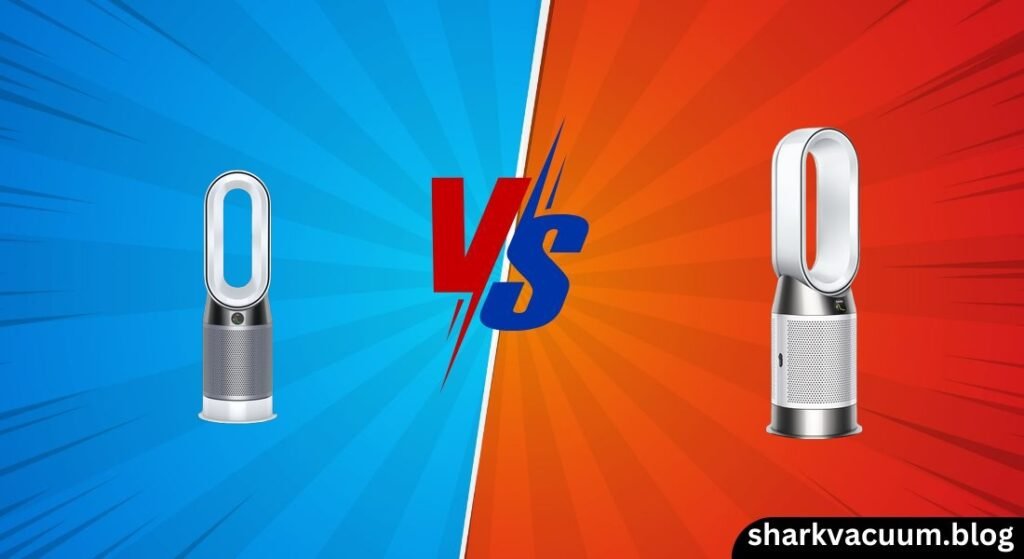
With air quality concerns rising and smart home tech becoming standard, Dyson’s 3-in-1 air purifier, heater, and fan combos sit at a crossroads: premium design versus real-world performance. The Dyson HP04, released in 2018, was once the smart flagship—Wi-Fi connected, app-controlled, and packed with sensors. The HP10 (Gen1), its predecessor, has vanished from official stores but lingers on the secondary market, praised for its sealed HEPA system and strong heating—but missing modern connectivity.
Affiliate disclosure: As an Amazon associate, We'll earn a commission for every successful order through our affiliate links in the article. However, you won’t be charged anything for this.
So which one should you buy now? Is the HP04’s app worth the high filter costs? Or does the older HP10 offer better value if you can find it refurbished? We dive deep into filtration, heating, noise, smart features, and long-term costs to answer the real question: Can either justify its price tag when cheaper purifiers do more? This Dyson HP04 vs HP10 comparison cuts through the marketing to show you which model actually delivers where it matters—and which one might just be a costly relic in disguise.
Why This Comparison Matters More Than Ever
The Dyson HP04 vs HP10 debate isn’t just about specs—it’s about value in a market where dedicated air purifiers outperform both. Dyson built a reputation on design and innovation, but when it comes to air cleaning, CADR (Clean Air Delivery Rate) is king. And neither the HP04 nor HP10 leads in that department. The HP04’s estimated CADR of 89 CFM is solid for a small room, but pales next to the Levoit Core 300’s 140 CFM at half the price. Still, Dyson’s edge has always been integration: a sleek 3-in-1 that heats, cools, and purifies without cluttering your space.
But here’s the catch: the HP10, despite being older, may actually purify better due to its fully sealed HEPA system—a feature Dyson quietly downplayed in later models. Meanwhile, the HP04 offers smart features that aging units like the HP10 simply can’t match. So you’re not just choosing between two machines—you’re choosing between sealed filtration integrity and smart home convenience. And with both models now available at vastly different price points, the decision gets even trickier. Let’s break it down.
Does the HP10 Actually Purify Better Than the HP04?
When it comes to air purification, not all HEPA filters are created equal—even if they claim the same rating. The Dyson HP10 Gen1 stands out in the HP04 vs HP10 debate because of one critical engineering detail: its fully sealed H13 HEPA system. This means the entire airflow path—from intake to output—is sealed to meet HEPA standards. Unfiltered air can’t sneak around the edges of the filter, a common flaw in many air purifiers (even some with HEPA labels). Dyson’s “what goes in, stays in” slogan isn’t just marketing; it’s a design principle that ensures true particle capture.
The HP04 also uses an H13 HEPA + carbon combo filter, claiming to capture 99.97% of particles at 0.3 microns, the gold standard for HEPA. However, Dyson doesn’t emphasize a sealed system for the HP04. While the filtration media is effective, the lack of a fully sealed path could allow minor air bypass, especially over time as seals degrade. Independent testing and user reports suggest this doesn’t drastically impact performance in typical homes, but for people with severe allergies, asthma, or pets, that sealed system in the HP10 could make a real difference in air quality.
HP10’s Sealed Filtration System: A Real Advantage?
Yes—especially if you prioritize airtight filtration. The HP10’s sealed design ensures that every breath of air passing through the unit is filtered, not just the majority. This is particularly important in high-pollution environments, homes with smokers, or households with allergy sufferers. The HP04, while still effective, doesn’t guarantee the same level of containment. In lab conditions, this might not show up, but in real-world use—where dust, pet hair, and airflow inconsistencies exist—the HP10’s build quality gives it a tangible edge.
Check the latest price of [Dyson HP10] on Amazon [link]
VOC & Gas Removal: Both Fall Short Without Formaldehyde Tech
Neither the HP04 nor HP10 breaks down formaldehyde, a feature reserved for newer Dyson models like the HP09. Both rely on activated carbon to absorb VOCs, cooking odors, and nitrogen dioxide (NO₂). The HP10 specifically mentions targeting benzene and nitrogen dioxide, common pollutants in urban homes near traffic or busy roads. The HP04 also captures VOCs, but its sensors provide more detailed feedback through the app.
But here’s the catch: carbon filters saturate. Without catalytic destruction (like in HP09), neither unit offers long-term gas protection. For heavy cooking, new furniture off-gassing, or homes with strong chemical exposure, both will eventually lose effectiveness. You’d need to replace the filter more frequently—defeating the purpose of a “set and forget” system. If VOC removal is a top priority, neither the HP04 nor HP10 is the best choice. But for general household odors and moderate pollution, both perform adequately.
Verdict: HP10 Wins on Filtration Integrity
While both use similar H13 HEPA + carbon filters, the HP10’s sealed system gives it a slight but meaningful edge in true HEPA performance. If you have asthma, pets, or live in a high-pollution area, that seal matters. The HP04 is still effective, but it’s not airtight in the same way.
🏆 Section Winner: HP10 – Its fully sealed filtration path ensures no unfiltered air bypass, making it the better purifier on paper and in practice.
See current deals on [Dyson HP04] here [link]
Can the HP04 Keep Up in Heating and Cooling?
When the temperature drops, you don’t want a purifier that doubles as a heater—you want one that actually heats. This is where the HP10 pulls ahead in the Dyson HP04 vs HP10 showdown. Both units draw around 2,500W of power, but the HP10’s airflow and heating design are optimized for whole-room warmth, not just spot heating. Multiple user reviews confirm it can raise temperatures in rooms over 300 sq ft, making it a viable primary heater in mild climates or well-insulated spaces.
The HP04 heats adequately but feels more like a personal or small-room heater. It’s fine for a bedroom or office, but don’t expect it to replace a dedicated space heater in a drafty living room. Its max airflow of 310 L/s (82 gal/s) is decent, but the HP10’s 290 L/s is paired with better thermal distribution and a wider base that supports more even heat projection.
Heating: HP10 Is Built to Warm Larger Rooms
User feedback consistently highlights the HP10’s superior heating performance. It’s not just about wattage—it’s about airflow engineering. The HP10’s oscillation and fan design work together to circulate warm air more effectively across larger spaces. The HP04, while functional, is better suited for personal heating or supplemental warmth. If you’re looking for a 3-in-1 that can actually replace a space heater, the HP10 is the better choice.
Cooling: Same Bladeless Fan Tech, Similar Performance
Both models use Dyson’s Air Multiplier™ technology—no blades, smooth airflow, 350° oscillation. Cooling is essentially a high-powered fan. Neither cools like an AC, but both circulate air well. The HP04 and HP10 deliver nearly identical cooling performance, with smooth, draft-free airflow that’s safe around kids and pets.
Noise levels are also very close:
– HP04: 37.2 dB (low) to 62 dB (max)
– HP10: Estimated 35–60 dB, with slightly quieter operation on low settings, especially in Night Mode
Both are quiet enough for sleep on lower speeds, and neither produces the high-pitched whine some fans are known for. Night Mode dims the display and reduces fan speed, making both excellent for bedrooms.
🏆 Section Winner: HP10 – It heats more effectively and consistently in larger rooms, giving it the edge in overall performance.
View [Dyson HP10] on Amazon [link]
Smart Features: Is the HP04’s App Worth the Trade-Off?
If you love smart home tech, the HP04 is the only real choice in this Dyson HP04 vs HP10 battle. The HP10 has zero smart features—no Wi-Fi, no app, no voice control. It’s a standalone device. You control it with the magnetic remote or buttons on the base. The LCD screen shows air quality and filter life, but that’s it. No scheduling. No remote access. No firmware updates.
The HP04, on the other hand, is fully connected.
HP04: Full Smart Home Integration
The HP04 is Wi-Fi enabled and works with:
– Dyson Link App (iOS/Android): Real-time PM2.5, VOC, temp, and humidity monitoring
– Amazon Alexa & Google Assistant: “Alexa, turn on purification”
– Siri Shortcuts: Automate routines
– Auto Mode: Adjusts fan speed based on air quality
– Filter life tracking & replacement alerts
You can monitor your home’s air while at work—handy for pet owners or allergy sufferers. The app provides historical data, so you can see trends in air quality over days or weeks. Auto Mode works well, ramping up the fan when you’re cooking and quieting down at night.
HP10: Zero Smart Features
The HP10 has no Wi-Fi, no app, no voice control. It’s a standalone device. You control it with the magnetic remote or buttons on the base. The LCD screen shows air quality and filter life, but that’s it.
No scheduling. No remote access. No firmware updates.
Pro Tip: If you hate tech bloat and just want a reliable machine that turns on and works—no updates, no bugs, no app crashes—the HP10’s simplicity might be a feature, not a flaw.
The Trade-Off: Smart Convenience vs. Lower Price
If you want automation, the HP04 wins. But that tech comes at a cost:
– Higher MSRP ($649 vs. HP10’s original $500 range)
– App connectivity issues reported by some users (lag, failed reconnection after power outages)
– Dependence on Dyson’s app ecosystem, which could change or be discontinued
For a simple, reliable 3-in-1 with no tech headaches? The HP10’s dumb simplicity might be a feature, not a flaw.
🏆 Section Winner: HP04 – It’s the only smart option, with full app control and voice integration.
Check the latest price of [Dyson HP04] on Amazon [link]
Design & Build: Same DNA, Slight Differences
Both the HP04 and HP10 share Dyson’s signature bladeless, tower-style design with magnetic remotes and 350° oscillation. They’re built to look good in modern homes, with clean lines and premium finishes. But there are subtle differences that affect usability.
| Feature | HP04 | HP10 |
|---|---|---|
| Dimensions | 30.1″H × 8.1″W × 5.1″D | 30.2″H × 9.8″W × 9.8″D |
| Weight | 12.36 lbs (5.6 kg) | 11.66 lbs (5.29 kg) |
| Base | Narrower, sleeker | Wider, more stable |
| Display | Digital, shows PM2.5, VOC, temp, humidity | LCD, shows air quality and filter life |
| Color Options | White/silver | White, nickel, blue |
The HP10 is chunkier but more stable, especially on carpet. The HP04 is slimmer, better for tight spaces like corners or between furniture. Both feel solid—no creaks, high-quality plastic, easy to wipe down.
The HP04’s digital display is more informative, showing real-time pollutant levels. The HP10’s LCD is simpler but gets the job done. If you care about aesthetics and space-saving design, the HP04 wins. If you want stability and a more rugged feel, the HP10 has the edge.
🏆 Section Winner: HP04 – Sleeker design, better display, and space-saving footprint.
See current deals on [Dyson HP10] here [link]
What’s in the Box? Both Include the Essentials
Both the HP04 and HP10 come with:
– The unit
– Magnetic remote control
– Pre-installed H13 HEPA + carbon filter
– 1.8m power cord
No extra attachments. No wall mount. No air quality calibration tools.
Note: The HP10’s filter is not compatible with the HP04. Dyson sells them separately:
– HP04 filter: ~$65 per year
– HP10 filter: ~$99 per year (more expensive, possibly due to lower availability)
This is a major long-term cost factor—the HP10 costs nearly 50% more to maintain.
View [Dyson HP04] on Amazon [link]
How Do They Feel to Use Every Day?
HP04: Seamless but Occasionally Frustrating
The HP04 delivers a modern smart experience:
– Auto Mode works well—fan ramps up when cooking, quiets down at night
– App is intuitive but can lag or disconnect
– Night Mode dims display and reduces noise—great for bedrooms
– Child lock prevents accidental changes
But some users report the app fails to reconnect after power outages, requiring a manual reset. The reliance on Wi-Fi means you lose control if your internet goes down.
HP10: Simple, Predictable, No Surprises
- LCD screen gives instant feedback
- Remote works instantly—no pairing, no Wi-Fi
- Night Mode is whisper-quiet
- No learning curve
It just works. No updates, no bugs, no dependency on servers. For tech-averse users, this is a major plus.
🏆 Section Winner: HP10 – Simpler, more reliable daily operation.
Check the latest price of [Dyson HP10] on Amazon [link]
How Much Will You Spend Over Time?
Upfront Cost: HP10 Is Cheaper Now
- HP04 (new/refurbished): $500–$650
- HP10 (refurbished/used): $250–$400
The HP10 is 30–50% cheaper today, even in good condition.
Annual Operating Costs: Both Are Expensive
| Cost Factor | HP04 | HP10 |
|---|---|---|
| Electricity (fan only, 24/7): | $38.89/year | Similar |
| Filter Replacement: | $65/year | $99/year |
| Heating (2 hrs/day): | ~$2.80/day | Similar |
| Total Annual Cost: | ~$104 | ~$137 |
The HP10 is more expensive to maintain—its filter costs nearly 50% more.
3-Year Total Cost of Ownership
- HP04: $650 + ($65 × 3) + ($39 × 3) = ~$917
- HP10: $350 + ($99 × 3) + ($39 × 3) = ~$812
Even with a higher filter cost, the HP10 wins on total ownership cost—if you buy it used.
🏆 Section Winner: HP10 – Lower total cost of ownership when purchased refurbished.
See current deals on [Dyson HP04] here [link]
Should You Worry About Long-Term Reliability?
Warranty & Support
- Both have 2-year limited warranty (machine), 6 months for filters
- HP04: Still supported by Dyson, firmware updates available
- HP10: No longer in production, no official support beyond existing warranty
Buying an HP10 means no repair path if it fails after warranty.
Filter Availability
- HP04 filters: Widely available
- HP10 filters: Still sold by Dyson, but could be discontinued
No signs of discontinuation yet, but it’s a risk.
Durability
Both are well-built. No widespread reports of motor failure or sensor issues. The HP10’s simpler design may mean fewer points of failure—no Wi-Fi module, no app sync issues.
🏆 Section Winner: HP04 – Ongoing support and filter availability.
View [Dyson HP10] on Amazon [link]
Full Specs Side-by-Side
| Feature | Dyson HP04 | Dyson HP10 (Gen1) |
|---|---|---|
| Model Year | 2018 | ~2017 (discontinued) |
| Functions | Purifier, heater, fan | Purifier, heater, fan |
| HEPA Filter | H13, 99.97% @ 0.3µm | H13, 99.95% @ 0.1µm, sealed |
| Carbon Filter | Yes | Yes |
| Air Quality Sensors | PM2.5, VOC, temp, humidity | PM, basic gas detection |
| Wi-Fi & App | Yes (Dyson Link) | No |
| Voice Control | Alexa, Google, Siri | No |
| Auto Mode | Yes | Yes |
| Night Mode | Yes | Yes |
| Oscillation | 350° | 350° |
| Max Airflow | 82 gal/s (~310 L/s) | 290 L/s |
| Noise Level | 37–62 dB | 35–60 dB (estimated) |
| Heating Power | ~2,500W | ~2,500W |
| Room Coverage | Up to 300 sq ft (practical) | Up to 300+ sq ft |
| Dimensions | 30.1″H × 8.1″W × 5.1″D | 30.2″H × 9.8″W × 9.8″D |
| Weight | 12.36 lbs | 11.66 lbs |
| Display | Digital, real-time data | LCD, air quality + filter life |
| Filter Cost | ~$65/year | ~$99/year |
| Warranty | 2 years | 2 years (if new) |
| Current Price | $500–$650 | $250–$400 (refurbished) |
Check the latest price of [Dyson HP04] on Amazon [link]
So, Which One Should You Actually Buy?
The HP04 Is Best If You Want:
✅ Smart home integration
✅ Remote air quality monitoring
✅ Auto-adjusting purification
✅ Modern app control and automation
✅ A sleek, space-saving design
But you’ll pay more upfront and face higher long-term costs. And remember: it’s not a high-CADR purifier—dedicated models like the Levoit Core 300 outperform it at half the price.
The HP10 Is Best If You Want:
✅ Better heating performance
✅ Superior sealed HEPA filtration
✅ Lower upfront cost (on the used market)
✅ Simple, reliable operation with no tech hassles
✅ Quieter low-speed operation
But you’re buying a discontinued product with no future support. And filters are more expensive.
Final Verdict: The HP10 Wins—But Only If You Buy It Used
The Dyson HP10 Gen1 is the better machine for most people—if you can find it in good condition for under $400. Its sealed HEPA system, stronger heating, and lower total cost of ownership make it a more honest 3-in-1.
The HP04 justifies its price only if you need app control and automation. For everyone else, it’s overpriced for its purification power.
Who Should Buy Which?
- Best for smart homes: HP04
- Best for allergy sufferers: HP10 (sealed system)
- Best for large rooms: HP10 (better heating)
- Best budget pick: HP10 (refurbished)
- Best long-term support: HP04
But here’s the real truth: neither is the best air purifier. If you only need purification, a Levoit, Coway, or Blueair will clean your air faster and cheaper.
Buy the HP04 or HP10 only if you truly want three devices in one—and are willing to pay Dyson’s premium for design and convenience.