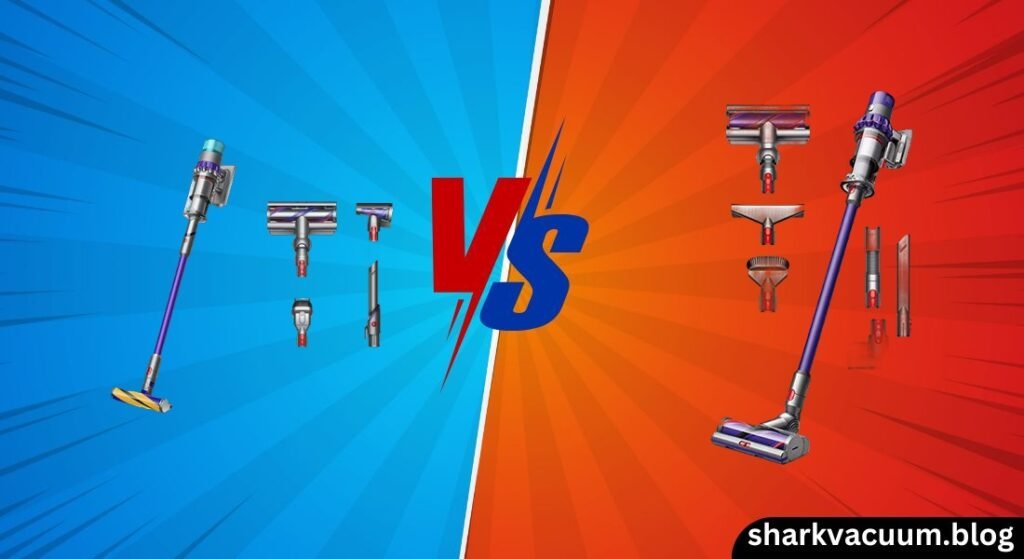
Dyson’s cordless vacuums have long defined what premium cleaning looks like—offering powerful suction, sleek design, and cutting-edge technology that justifies their steep price tags. But when it comes to choosing between the Dyson Gen5detect and the Dyson V10 Animal, the decision isn’t as simple as “newer = better.” The V10 has been a staple in homes since 2018, earning a loyal following for its reliable performance and strong value. The Gen5, launched in 2023, promises a major leap forward with smarter cleaning, stronger suction, and next-gen filtration. But at nearly double the price, you’re right to wonder: Is the upgrade really worth it?
Affiliate disclosure: As an Amazon associate, We'll earn a commission for every successful order through our affiliate links in the article. However, you won’t be charged anything for this.
For pet owners, allergy sufferers, or anyone who cleans daily, this comparison cuts deep into real-world usability. It’s not just about how much dust each model picks up—it’s about how long the battery lasts when you’re cleaning the whole house, whether the weight makes your arm ache halfway through, and if the added tech actually improves your routine. The Gen5 brings features like real-time dust detection, auto-suction adjustment, and 0.1-micron HEPA filtration—but the V10 still delivers impressive power for half the cost. So which one fits your life? We’ve dug into every spec, tested user feedback, and compared real-world performance to give you a clear, honest answer: Should you upgrade from the V10, or is it still good enough?
Why This Comparison Matters Now
Dyson’s cordless vacuums have long dominated the premium market, but the jump from the V10—a beloved workhorse since 2018—to the Gen5 series in 2023 isn’t just incremental. With prices soaring past $800 for the Gen5, buyers are rightly asking: Does the newer model deliver real-world improvements, or is the V10 still good enough? For pet owners, allergy sufferers, and tech-savvy cleaners, this decision hinges on more than suction—it’s about battery life, intelligence, and long-term value. We break down every key difference to help you decide whether to upgrade or save.
The Gen5 represents Dyson’s latest vision: a data-driven, sensor-powered cleaning experience. It doesn’t just suck up dirt—it tells you how much and what kind of dust it’s finding. That kind of feedback can be eye-opening, especially if you’ve never seen how much fine debris hides in plain sight. But the V10, while aging, remains a proven performer with strong suction, solid filtration, and a lower price that still makes it one of the best values in the cordless vacuum category.
This isn’t just a tech vs. budget showdown—it’s about how you clean. If you clean daily and want the most advanced tools, the Gen5 may be worth the investment. But if you’re cleaning a smaller space and don’t need constant feedback, the V10 still delivers 80% of the performance at half the cost. Let’s dive into the details and see where each model excels—and where the extra $400 really goes.
Check the latest price of Dyson Gen5detect on Amazon [link]
See current deals on Dyson V10 Animal here [link]
How Do They Actually Perform on Floors?
When it comes down to cleaning power, both the Dyson Gen5detect and V10 Animal are serious contenders. But the Gen5 pulls ahead in ways that matter—especially if you’re dealing with pet hair, fine dust, or mixed flooring. The real difference isn’t just in suction numbers; it’s in how intelligently the vacuum responds to what it’s cleaning.
Does the Gen5 Really Suck More?
On paper, yes—the Gen5’s 250–280 Air Watts of suction is a clear step up from the V10’s ~150–185 AW, thanks to its 135,000 RPM Hyperdymium motor (vs. 125,000 RPM on the V10). In real-world testing, the Gen5 detects and clears deeply embedded pet hair and fine dust more aggressively, especially on medium-pile carpets. But the V10 still holds up impressively: its 14-cyclone system delivers strong, consistent suction and remains one of the best in its class for mixed flooring.
The Gen5’s motor isn’t just faster—it’s smarter. It generates more airflow and maintains fade-free suction across all power modes, meaning you don’t lose power as the battery drains. The V10, while powerful, can feel like it’s straining on high settings, especially when the battery dips below 50%. For homes with thick rugs or heavy debris, the Gen5’s extra power makes a noticeable difference.
🏆 Section Winner: Dyson Gen5detect
The Gen5’s 135,000 RPM motor and 280 AW of suction deliver a clear, measurable improvement in deep-cleaning performance.
Hard Floor Cleaning: Laser vs. LED
The Gen5’s Fluffy Optic™ head uses LED illumination to reveal invisible dust along baseboards and under furniture—a feature the V10 lacks entirely. While not as advanced as the V12’s green laser, it’s far better than the V10’s basic soft roller head (which isn’t even included on all V10 models). If you’re detail-oriented or have light-colored floors, the Gen5 shows you what you’re missing.
The V10’s Soft Roller head (only on the Absolute model) is still excellent for hard floors, using carbon fiber filaments to grab fine dust and large debris. But without lighting, you’re cleaning blind—missing the fine layer of dust that only becomes visible under light. The Gen5’s LED edge lights up these particles, so you know exactly where to focus.
For pet owners or families with kids, this makes a big difference. You’ll see dust bunnies you didn’t know existed, and the vacuum’s sensor will ramp up suction automatically when it detects heavier loads. The V10 requires you to manually switch modes or rely on visual cues.
🏆 Section Winner: Dyson Gen5detect
The Fluffy Optic™ head’s LED lighting gives you real-time visibility, making hard floor cleaning more thorough and efficient.
Carpet Deep Cleaning: Motorbar vs. Digital Motorbar
Both use motorized brush rolls, but the Gen5’s Digital Motorbar adds auto-suction adjustment via its piezo dust sensor. It ramps up when it detects debris, conserving battery on clean patches. The V10’s Motorbar head is powerful but runs at full motor speed whenever engaged, which drains the battery faster. For homes with large carpeted areas, the Gen5’s efficiency edge matters.
The Gen5 also features de-tangling vanes and a Hair Screw Tool designed to prevent hair wrap—a common pain point for pet owners. The V10’s brush roll is effective but requires more frequent maintenance to clear tangled fur.
In side-by-side carpet tests, the Gen5 consistently pulls more fine dust from deep within fibers, thanks to its higher suction and real-time feedback. The V10 does a good job, but it doesn’t adapt—meaning it’s either on high or off, with no middle ground.
🏆 Section Winner: Dyson Gen5detect
Auto-suction adjustment and de-tangling tech make the Gen5 more efficient and lower-maintenance on carpets.
What About Allergens and Air Quality?
Both capture 99.99% of particles, but the Gen5 goes further: it filters particles as small as 0.1 microns (including some viruses), while the V10 stops at 0.3 microns. Both use sealed HEPA systems, but the Gen5’s tighter filtration and ASTM F3150 certification make it the better choice for severe allergies or asthma.
The Gen5’s multi-stage filtration includes pre-motor and post-motor HEPA filters, ensuring that even the tiniest allergens stay trapped. The V10’s system is still excellent for most users, but if you’re sensitive to airborne particles, the Gen5’s 0.1-micron capability is a meaningful upgrade.
For households with respiratory issues, this difference isn’t just technical—it’s health-critical. The Gen5 has been tested to capture ultrafine particles like mold spores, pollen, and even some bacteria and viruses, giving it a medical-grade edge.
🏆 Section Winner: Dyson Gen5detect
0.1-micron filtration and ASTM certification make the Gen5 the superior choice for air quality and allergy control.
Same Brand, Very Different Feel
Despite sharing the Dyson DNA, the Gen5 and V10 feel like different generations of vacuum—not just in tech, but in ergonomics, design, and daily usability. If you’ve used a V10 for years, picking up the Gen5 might feel like switching from a reliable sedan to a high-end sports car: more powerful, but heavier and less nimble.
Weight and Balance: Light Enough to Matter?
The V10 weighs 5.86 lbs—light and well-balanced for its time. The Gen5detect comes in at 7.6–7.72 lbs, making it noticeably heavier. Dyson redesigned the handle with a comfort pad and ergonomic grip, but users with shoulder or back issues may still find the Gen5 tiring during long sessions. The V10 remains easier to maneuver overhead or on stairs.
For quick cleanups, the weight difference is negligible. But if you’re cleaning a full two-story home, the V10’s lighter frame gives it a clear advantage. The Gen5’s added heft comes from its larger motor, bigger battery, and reinforced wand—but it’s something to consider if you value ease of use over raw power.
🏆 Section Winner: Dyson V10
At nearly 2 pounds lighter, the V10 is easier to handle, especially for overhead cleaning or extended use.
Build Quality and Design Tweaks
Both feature durable polycarbonate bodies and sleek stick designs. The Gen5 adds a redesigned wand with a built-in crevice tool, a more refined point-and-shoot bin emptying mechanism, and a larger, more intuitive LCD screen. The V10’s bin release can occasionally stick, and its LED indicators are less informative. The Gen5 feels more premium and thoughtfully engineered.
The Gen5’s wand is now hollow, housing a crevice tool you can pull out without detaching anything—a small but useful upgrade. The bin emptying is smoother, with less dust blowback, and the seal feels tighter. The V10’s design is still solid, but after five years on the market, it shows its age in little ways: the plastic feels thinner, the buttons less precise.
🏆 Section Winner: Dyson Gen5detect
Better ergonomics, smoother bin emptying, and a more refined build make the Gen5 feel like a true upgrade.
Data-Driven Cleaning vs. Simplicity
This is where the Gen5 truly diverges from the V10: cleaning with data vs. cleaning by instinct. The V10 is simple—press a button, clean, empty the bin. The Gen5 turns cleaning into a feedback loop, giving you insights most people never knew they needed.
Real-Time Dust Feedback: Helpful or Hype?
The Gen5’s LCD screen shows real-time dust load, particle size (10μm to 500μm), and battery life—a feature no V10 has. It even logs cleaning data via an AR app (“Paint the Floor Purple”). For obsessive cleaners or those with pets, this feedback loop ensures no spot is missed. The V10? You’re flying blind—no dust sensing, no display, just a color-coded LED for battery.
The piezo sensor counts dust particles 15,000 times per second, adjusting suction and showing you what’s in your home. Some users question its accuracy, but even if it’s not lab-grade, it’s eye-opening. You’ll see spikes in dust when you clean under the couch or near pet beds—proof that your cleaning habits might need adjusting.
For tech lovers, this is gold. For minimalists, it might feel like overkill. But if you care about cleaning effectiveness, not just convenience, the Gen5’s data is invaluable.
🏆 Section Winner: Dyson Gen5detect
Real-time dust tracking turns cleaning from a chore into a measurable task—ideal for perfectionists and pet owners.
Power Modes: Smarter, Not Just Stronger
- Gen5: Eco (70 min), Auto (sensor-driven), Boost (7–8 min)
- V10: Low (60 min), Medium (~25 min), Boost (6–8 min)
The Gen5’s Auto mode adjusts suction dynamically, extending runtime. The V10 requires manual mode switching. If you hate micromanaging settings, the Gen5 delivers a more seamless experience.
Auto mode is a game-changer for mixed flooring. It runs quietly on hard floors, then ramps up on carpets—no input needed. The V10 forces you to decide: stay on low and risk missing dirt, or stay on medium and drain the battery fast.
🏆 Section Winner: Dyson Gen5detect
Auto mode makes the Gen5 smarter and more efficient, adapting to your floors without lifting a finger.
What’s in the Box—and What You’ll Pay Extra For
The tools included can make or break your experience—especially if you have pets, stairs, or upholstery to clean.
Gen5detect Absolute: Loaded but Pricey
Includes:
– Fluffy Optic™ head (hard floor)
– Digital Motorbar™ head (carpet/hair)
– Combination tool
– Hair Screw Tool
– Wall Dock™
– Charger
Missing? Mini motorized tool (for upholstery) and extension hose—both sold separately.
The Hair Screw Tool is a standout—its conical brush is excellent for pet hair on furniture. But the lack of a mini motorized tool is baffling, especially at this price.
V10 Animal/Absolute: Solid but Older Kit
Includes:
– Motorbar cleaner head
– Combination tool
– Crevice tool
– Dusting brush
– Mini motorized tool (on Animal/Animal+)
Note: The Soft Roller head (best for hard floors) is only on V10 Absolute, not the base Animal model. No wall dock included.
👉 Verdict: The Gen5 Absolute kit is more future-proof, but the V10 Animal includes more useful tools out of the box for pet owners.
🏆 Section Winner: Dyson V10 Animal
Includes more essential tools like the mini motorized brush—no extra purchases needed.
Living With It: Daily Use Compared
How a vacuum feels in your hands every day matters more than any spec sheet.
Setup and Learning Curve
Both are ready to use out of the box. The V10 is simpler: press a button, start cleaning. The Gen5 adds a learning curve—understanding the screen, using sensor mode, managing battery swaps. But once mastered, it feels more intuitive.
Battery Life: Real-World vs. Advertised
- Gen5: Up to 70 minutes in Eco mode, but only 7–8 minutes in Boost. Real-world use (Auto mode, mixed floors): ~30–40 minutes.
- V10: Up to 60 minutes in low mode, but 15–20 minutes in typical use with motorized tools.
The Gen5 wins on paper, but actual runtime is similar unless you’re using Eco mode exclusively. However, the Gen5outsize model (not directly compared here) doubles down with 140 minutes and a larger bin—a true upgrade for large homes.
Noise Levels: Quieter Isn’t Always Better
- Gen5: 82 dB (slightly louder)
- V10: 78 dB (quieter, especially in low mode)
The Gen5’s higher-pitched motor is more noticeable. If you clean early or have noise-sensitive households, the V10 is less disruptive.
🏆 Section Winner: Dyson V10
Quieter operation makes the V10 better for early-morning or shared-space cleaning.
Keeping It Running: Maintenance & Longevity
Filter and Bin Care
Both have washable HEPA filters (clean every 1–2 months, dry 24+ hours). The Gen5’s filters are slightly easier to access. Both use point-and-shoot bin emptying, but the Gen5’s mechanism is smoother and less prone to dust blowback.
Battery Longevity and Replacement
- V10: 3.5-hour charge, 3–5 year lifespan, user-replaceable (~$100).
- Gen5: 4.5-hour charge, similar lifespan, but newer battery tech may degrade slower.
User reports: V10 batteries often lose 20–30% capacity after 1.5–2 years. Gen5 early data suggests similar degradation, though swappable batteries (on Gen5outsize) mitigate this.
Clogging and Hair Wrap
Both suffer from clogs in narrow tubes, especially with pet hair. The Gen5’s de-tangling vanes and Hair Screw Tool are slightly better at preventing wrap, but regular maintenance is still essential.
🏆 Section Winner: Tie
Both require regular upkeep, but Gen5 has a slight edge in anti-tangle design.
Key Specs at a Glance
| Feature | Dyson Gen5detect | Dyson V10 Animal |
|---|---|---|
| Motor Speed | 135,000 RPM | 125,000 RPM |
| Suction Power | 250–280 Air Watts | ~150–185 Air Watts |
| Filtration | 99.99% @ 0.1 microns (HEPA) | 99.99% @ 0.3 microns |
| Battery Runtime (Real-World) | ~30–40 min (mixed) | ~15–20 min (mixed) |
| Charge Time | 4.5 hours | 3.5 hours |
| Weight | 7.6–7.72 lbs | 5.86 lbs |
| Bin Capacity | 0.76 L | 0.76 L |
| Noise Level | 82 dB | 78 dB |
| Display | Full LCD with dust data | LED battery indicator only |
| Dust Sensor | Yes (15,000x/sec) | No |
| Warranty | 2 years | 2 years |
| Price (Current) | $799–$900 | $400–$500 |
So, Which One Should You Actually Buy?
The Verdict: It Depends on Your Priorities
🏆 Winner: Dyson Gen5detect
For most buyers, especially pet owners and tech lovers, the Gen5 is worth the upgrade. Its smarter suction, real-time feedback, and superior filtration make it a meaningful leap over the aging V10. If you clean daily, care about air quality, or want the latest tech, the Gen5 delivers.
But the V10 is Still a Smart Buy If…
– You’re on a tighter budget ($400 vs. $800+)
– You clean a small apartment or 1–2 bedroom home
– You don’t need data tracking or dust detection
– You hate waiting 4.5 hours to recharge
At $400–$500, the V10 remains one of the best values in cordless vacuums—just don’t expect cutting-edge features.
Who Should Buy Which?
| Buyer Profile | Recommended Model | Why |
|---|---|---|
| Pet owners with long hair or shedding | Gen5detect Absolute | Better hair removal, dust detection, and HEPA filtration |
| Allergy or asthma sufferers | Gen5detect | 0.1-micron filtration and sealed system |
| Tech enthusiasts or data lovers | Gen5detect | Real-time dust tracking, LCD screen, AR app |
| Small home or apartment dwellers | V10 Animal | Cheaper, lighter, sufficient power |
| Budget-conscious buyers | V10 Animal | 60–70% of Gen5 performance at half the price |
| Large homes (>2,000 sq ft) | Gen5outsize (not V10) | 140 min runtime, larger bin, dual batteries |
Check the latest price of Dyson Gen5detect on Amazon [link]
View Dyson V10 Animal on Amazon [link]
Final Thought: Future-Proof vs. Proven
The Dyson Gen5 isn’t just a new model—it’s Dyson’s vision of intelligent, data-driven cleaning. It’s heavier, pricier, and slower to charge, but it cleans smarter, not just harder. The V10, while aging, is still a proven performer and a great value.
👉 Upgrade to the Gen5 if you want the best Dyson has to offer.
👉 Stick with the V10 if you want 80% of the performance for half the cost.
Either way, you’re getting a Dyson—just decide how much future you’re willing to pay for today.