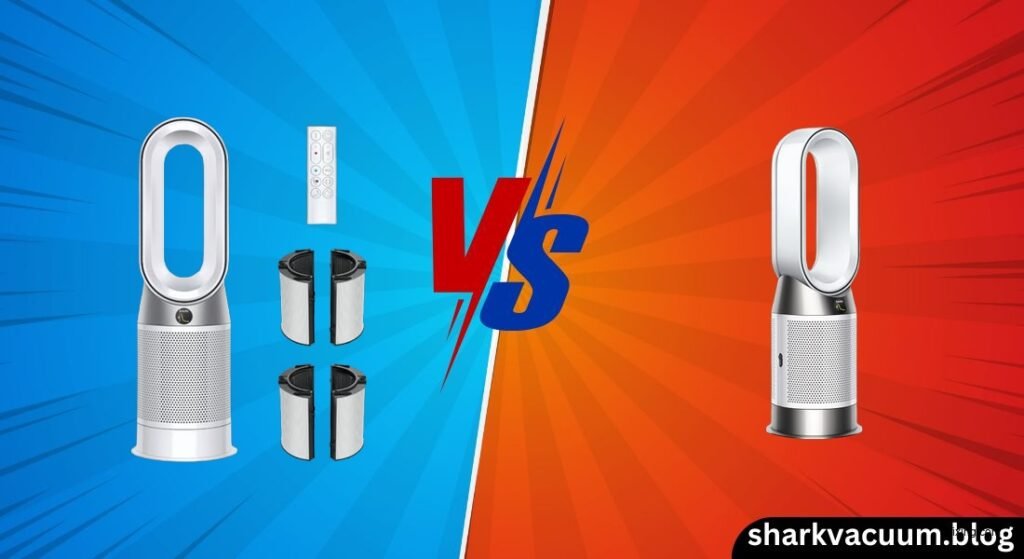
Dyson’s Purifier Hot+Cool lineup has become a go-to for buyers who want year-round climate control, air purification, and smart features in one sleek device. But with multiple models on the market—especially the HP7C and HP10 (Gen1)—it’s easy to get confused. Are they the same? Is the newer HP10 worth nearly double the price of a discounted HP7C? And can you really rely on these units for heating as well as filtering?
Affiliate disclosure: As an Amazon associate, We'll earn a commission for every successful order through our affiliate links in the article. However, you won’t be charged anything for this.
This isn’t just about specs—it’s about whether you’re paying for real performance or just marketing. We break down every key difference between the Dyson HP7C and HP10, from filtration and heating power to smart features and long-term ownership costs, so you can decide which model actually fits your home, budget, and health needs.
Why This Comparison Matters Right Now
The Dyson HP7C vs HP10 debate is more than a simple model upgrade—it’s a clash of value versus visibility. Both units promise the same core benefits: 360° HEPA H13 filtration, year-round heating and cooling, and Dyson’s signature Air Multiplier design. On paper, they look nearly identical. But dig deeper, and the differences start to matter—especially if you care about smart home integration, real-time feedback, or simply not overspending.
The HP7C often sells for as low as $199.97 at Costco, while the HP10 holds a $629.99 MSRP with rare discounts. That’s a $300–$400 difference for what appears to be a nearly identical machine. So, what justifies the price jump? Is it better filtration? Faster heating? Smarter automation?
Spoiler: It’s not. The HP10 trades app connectivity for an on-device LCD screen that shows real-time air quality. That’s the big change. For some, that screen is worth the premium. For others, losing Wi-Fi and voice control at this price feels like a step backward. This comparison cuts through the marketing to show you exactly what you’re gaining—and losing—when choosing between these two models.
Check the latest price of [Dyson HP7C] on Amazon [link]
See current deals on [Dyson HP10] here [link]
Does the HP10 Outperform the HP7C—or Are They Basically the Same?
At their core, the Dyson HP7C and HP10 (Gen1) are built on the same foundation. They share the same 360° Glass HEPA H13 + Activated Carbon combo filter, capture 99.97% of particles down to 0.3 microns, and are rated for spaces up to 872 sq ft. Whether it’s PM2.5, pollen, pet dander, VOCs, or formaldehyde, both units are engineered to remove the same pollutants with the same efficiency.
The filtration media, sealing, and airflow design are functionally equivalent. Independent testing and user reports confirm that in real-world conditions, both models clean the air just as effectively. If your primary goal is cleaner air—especially for allergies, asthma, or pet owners—neither unit has a meaningful edge in purification power.
Purification: Nearly Identical Core Filtration, But HP10 Adds Display Clarity
Where the HP10 pulls ahead is in user feedback and visibility. It features a real-time LCD display on the front panel that shows live readings for PM2.5, VOCs, and NO₂. This means you can see your air quality improving without opening an app. For users who want instant, visual confirmation—especially in shared spaces like offices or living rooms—this is a significant usability upgrade.
In contrast, the HP7C relies on a color-coded light ring at the base to indicate air quality. Green means good, amber means moderate, red means poor. While functional, it’s far less informative. To get detailed data, you must open the MyDyson app—which the HP10 doesn’t have.
So while the purification performance is identical, the user experience is not. The HP10 wins on transparency, giving you on-the-spot insights. The HP7C keeps the same powerful filtration but pushes detailed monitoring to your phone.
🏆 Section Winner: HP10 – For real-time air quality visibility, the HP10’s LCD screen is a clear upgrade over the HP7C’s light ring.
Check the latest price of [Dyson HP10] on Amazon [link]
Heating Power: Is the HP10 Better—or Are Both Too Weak for Real Winter Use?
Let’s be honest: neither the HP7C nor the HP10 is a powerhouse heater. Multiple user reports confirm that both units heat slowly and struggle to serve as a primary heat source in cold or large rooms. One HP7C owner returned it because it “warms too slowly,” highlighting a common frustration.
Both models use the same heating element and airflow system, so there’s no meaningful difference in heating performance. They can maintain a set temperature in a moderately sized room (up to ~300 sq ft) but lack the BTU output to quickly warm a chilly space. If you’re relying on this as your main winter heater, you’ll likely be disappointed.
Both Models Struggle as Primary Heaters
That said, they do work well as supplemental heaters. In a bedroom, home office, or basement, they provide gentle, purified warmth. The HP10 has a slight edge in usability thanks to its LCD interface, which lets you see and adjust the temperature directly on the unit. The HP7C requires you to use the remote, app, or voice commands—less immediate if you’re adjusting on the fly.
Both support Auto Mode, where the unit adjusts heating based on your set temperature and room conditions. But again, don’t expect rapid heating. These are convection-style heaters, not forced-air units.
If you live in a cold climate or need strong, fast heating, neither model is the right choice. But if you want quiet, filtered warmth in a smaller space, both will do the job—just slowly.
🏆 Section Winner: Tie – Heating performance is nearly identical. The HP10 has better interface feedback, but neither unit heats quickly enough for primary use in winter.
View [Dyson HP7C] on Amazon [link]
Design & Build: Same Signature Look, But HP10 Feels More Premium
At first glance, the HP7C and HP10 are almost indistinguishable. Both stand 30.2 inches tall, weigh around 11.7 lbs, and feature Dyson’s signature Air Multiplier design with a smooth, bladeless ring and 350° oscillation. The materials, finish, and footprint are the same—sleek, modern, and space-efficient.
The core build quality is excellent on both units. They feel solid, operate quietly, and blend well into most home decors. The magnetic curved remote is included with both and stores neatly on the back of the machine.
Nearly Identical Form Factor, But HP10 Nudges Ahead in Usability
The HP10’s key design upgrade is the integrated LCD screen on the front panel. This isn’t just a status light—it’s a full real-time air quality dashboard showing PM2.5, VOCs, temperature, and humidity. It transforms the unit from a “set it and forget it” device into one that actively communicates with you.
The HP7C, by comparison, has no screen at all. You get a small light ring at the base and rely on the app or remote for detailed info. For users who don’t want to pull out their phone every time they want to check air quality, this is a major downside.
Other than the screen, the design differences are minimal. Both have the same button layout, remote functionality, and oscillation control. But that LCD screen makes the HP10 feel more premium and user-friendly—even if it comes at the cost of smart features.
🏆 Section Winner: HP10 – The addition of the LCD screen gives it a more modern, informative, and premium feel.
See current deals on [Dyson HP10] here [link]
Smart Features & App Control: HP7C Wins for Tech-Savvy Users
Here’s where the Dyson HP7C vs HP10 comparison takes a sharp turn. Despite being the newer model, the HP10 Gen1 has no Wi-Fi, no app connectivity, and no voice control. That’s right: a $630 air purifier heater with zero smart home integration.
In contrast, the HP7C fully supports the MyDyson app, offering remote control, scheduling, automations, and detailed usage history. It integrates with Alexa, Google Assistant, and Siri Shortcuts, making it a true smart home device.
HP7C: Fully Smart. HP10: Surprisingly Dumb (for Dyson)
What the HP7C offers:
– Remote control via MyDyson app (iOS/Android)
– Scheduling: Set it to turn on at bedtime or when you get home
– Automations: Trigger based on air quality, temperature, or location
– Usage history: Track air quality trends over time
– Voice control: “Hey Google, turn on the purifier”
What the HP10 has:
– No app support
– No Wi-Fi or cloud connectivity
– No voice control
– Manual, remote, or Auto mode only
This is a massive difference. For users who want to automate their home, monitor air quality while away, or integrate with routines (e.g., “Turn on when I unlock the front door”), the HP7C is the only real choice. The HP10’s lack of connectivity feels outdated in 2025, especially at its premium price.
You’re paying $200+ more for the HP10 but losing smart functionality. For tech-savvy buyers, this is a dealbreaker.
🏆 Section Winner: HP7C – Full app and voice control make it the only truly smart option.
Check the latest price of [Dyson HP7C] on Amazon [link]
Accessories & What’s in the Box: Same Core Components, But Watch for Filter Costs
Both the HP7C and HP10 come with the same core accessories in the box:
– Pre-installed 360° HEPA + Carbon filter
– Magnetic curved remote (stores on unit)
– User manual and setup guide
There are no differences in what’s included. Both units use the same filter type (360° Glass HEPA H13 + Activated Carbon), and both remotes offer 10-speed control with magnetic storage.
Replacement Filter Costs: A Major Long-Term Factor
Where costs diverge is in filter replacement:
– HP7C official filter: $79.99 (Dyson part #965432-01)
– HP10 official filter: ~$100 (estimated based on equivalent models and pricing trends)
– Third-party alternatives: Available on Amazon for $40–$60, often marketed for pet owners
Both units recommend annual filter replacement, though many users report stretching this to 18–24 months in low-pollution environments. Dyson’s filter life algorithm is conservative, so you may get more life out of a filter than the alert suggests.
However, third-party filters come with risks. Dyson warns they may not seal properly or meet true HEPA H13 standards. If you have allergies, asthma, or pets, sticking with OEM filters is safer.
Over 5 years, the HP10’s higher filter cost adds $100+ to ownership—another reason the HP7C wins on value.
🏆 Section Winner: HP7C – Lower filter cost and same performance make it more affordable long-term.
View [Dyson HP7C] on Amazon [link]
Usability Day-to-Day: Which One Fits Your Routine?
Your daily routine and tech habits will heavily influence which model works better for you.
HP7C: Best for App Users & Automation Lovers
If you like scheduling your purifier to run at night, checking air quality from bed, or integrating it into a smart home routine, the HP7C is far more convenient. The MyDyson app gives you full control, alerts, and insights without touching the unit. You can set it to turn on when you leave work, monitor PM2.5 levels while traveling, or create automations with other smart devices.
For renters, parents, or tech users, this level of control is invaluable.
HP10: Simpler, But Frustratingly Limited
The HP10 is easy to use if you’re in the same room. You can adjust temperature, fan speed, and modes with the remote or buttons. The LCD screen provides instant feedback, which is great for guests or shared spaces.
But no app means no remote monitoring, no automations, and no integration with smart home routines. If you want to check air quality from another room, you have to walk over. If you forget to turn it on, you’re out of luck unless you use a smart plug—which defeats the purpose.
For non-tech users or those who value simplicity, the HP10 might be fine. But for everyone else, it feels under-equipped at this price.
🏆 Section Winner: HP7C – App control and automation offer far greater convenience for most users.
See current deals on [Dyson HP10] here [link]
Maintenance & Long-Term Ownership: Nearly Identical, But HP10’s Display Helps
Both units are low-maintenance and built to last. They come with a 2-year limited warranty and Dyson’s 12-month service guarantee (parts + labor). There are no major reliability red flags reported for either model.
Filter replacement is simple and tool-free on both. The machine alerts you when it’s time—via app notification (HP7C) or on-screen LCD alert (HP10). The HP10’s built-in display makes it easier to notice without relying on phone notifications.
One user reported a “crunching” sound when airflow reverses on an older HP02 model, but this hasn’t been widely confirmed. Both units have tip-over protection, child lock, and cool-touch exteriors for safety.
Filter Life & Replacement: Same Cycle, Better Alerts on HP10
While both units recommend annual filter changes, the HP10’s LCD makes it easier to see the alert. The HP7C’s app notification can be missed if you don’t check regularly.
Still, the HP7C’s app offers more insight—like usage trends and air quality history—making it better for long-term tracking.
Overall, maintenance is nearly identical. The HP10 wins on immediate visibility, but the HP7C wins on data depth.
🏆 Section Winner: Tie – HP10 has better on-device alerts, HP7C has richer app data.
Check the latest price of [Dyson HP7C] on Amazon [link]
Specifications: Side-by-Side Comparison
| Feature | Dyson HP7C | Dyson HP10 (Gen1) |
|---|---|---|
| Model Type | Purifier Hot+Cool | Purifier Hot+Cool Gen1 |
| Price (MSRP) | $599.99 | $629.99 |
| Typical Sale Price | $199.97–$399.97 (Costco) | $629.99 (rare discounts) |
| Filtration | 360° HEPA H13 + Carbon | 360° HEPA H13 + Carbon |
| Particle Capture | 99.97% @ 0.3 microns | 99.97% @ 0.3 microns |
| Gas Removal | VOCs, NO₂, formaldehyde | VOCs, NO₂, formaldehyde |
| Coverage Area | Up to 872 sq ft | Up to 872 sq ft |
| Airflow (Max) | ~76 g/s | 77 g/s |
| Oscillation | 350° | 350° |
| Display | No screen; light ring | Real-time LCD air quality display |
| App Control | ✅ MyDyson app (iOS/Android) | ❌ No Wi-Fi or app support |
| Voice Control | Alexa, Google, Siri | ❌ Not supported |
| Remote Control | Magnetic, 10-speed | Magnetic, 10-speed |
| Heating Function | Yes | Yes |
| Cooling Function | Yes | Yes |
| Night Mode | Yes | Yes (40% quieter) |
| Filter Replacement Cost | $79.99 | ~$100 |
| Filter Life | 12 months (or app alert) | 12 months (LCD alert) |
| Warranty | 2-year limited | 2-year limited |
| Smart Home Integration | High | None |
Verdict: So, Which One Should You Actually Buy?
The HP7C is the Best Value—If You Can Find It on Sale
At $200–$300 (common at Costco), the HP7C is a steal—especially if you want app control, scheduling, and smart home integration. It matches the HP10 in purification and heating, adds full connectivity, and costs less than half the HP10’s price. For tech-savvy users, renters, or anyone who wants automation, this is the clear winner.
Buy the HP7C if:
– You want smart features and app control
– You’re on a budget and can catch a warehouse club sale
– You plan to use voice assistants or automations
– You don’t need an on-device air quality display
The HP10 Makes Sense Only If You Prioritize Simplicity and Real-Time Feedback
The HP10’s LCD screen is its killer feature—giving you instant, visual feedback on air quality. But the lack of app connectivity is a major flaw at this price. You’re paying a $200+ premium over a discounted HP7C for a screen, while losing smart functionality.
Buy the HP10 only if:
– You hate using apps and want all info on-device
– You value real-time air quality visibility over automation
– You’re buying at full price and don’t care about smart home integration
– You’re using it in a shared space (e.g., office) where others need to see air quality
Final Recommendation: Who Should Buy Which?
| Buyer Type | Best Choice | Why |
|---|---|---|
| Budget-conscious buyer | ✅ HP7C (on sale) | Gets 95% of HP10’s performance at half the price |
| Smart home user | ✅ HP7C | Only one with app, voice, and automation support |
| Non-tech user | ⚠️ HP10 | Simpler, but still expensive for what it lacks |
| Allergy/asthma sufferer | ✅ HP7C or HP10 | Same filtration—choose based on budget and features |
| Primary heater needed | ❌ Neither | Both heat too slowly for real winter use |
| Pet owner | ✅ HP7C (on sale) | Excellent odor and dander removal at a better price |
Bottom Line: Skip the HP10 Unless You Really Want That Screen
The Dyson HP7C, when found on sale, is one of the best values in premium air purifiers. The HP10, while well-built, is overpriced and under-connected. For most buyers, the HP7C delivers the same core performance—with smarter features—for hundreds less.
Wait for a Costco deal. Buy the HP7C. Save the $300. Your air will be just as clean.