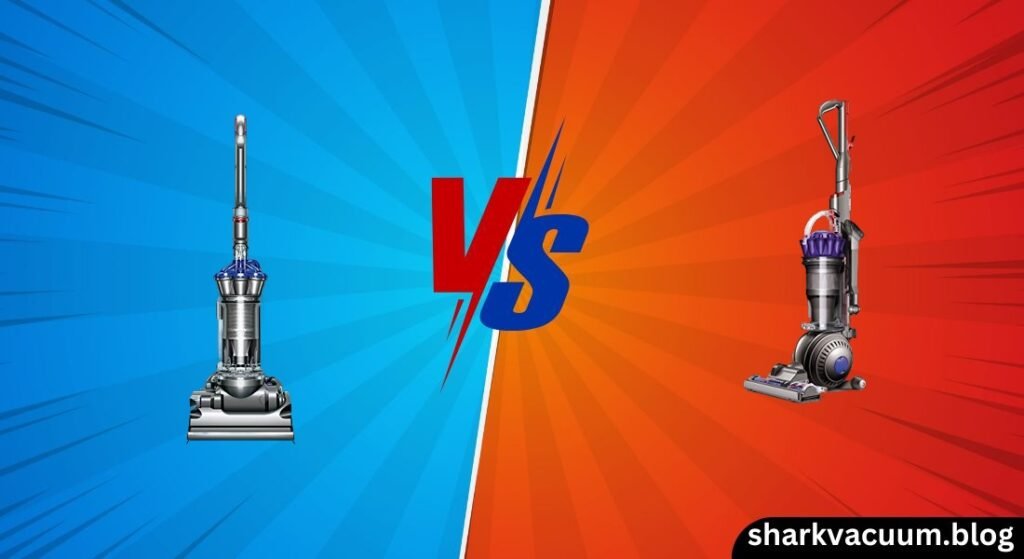
Dyson upright vacuums have long been a staple in homes that demand powerful, no-nonsense cleaning — especially where pets, allergies, or mixed flooring are a concern. The DC33 and DC65, though released years apart (2010 and 2013 respectively), still surface frequently in the used and refurbished market, often at compelling prices. For budget-conscious buyers or those avoiding the sticker shock of newer Dyson models, comparing these two older uprights isn’t just nostalgic — it’s practical.
Affiliate disclosure: As an Amazon associate, We'll earn a commission for every successful order through our affiliate links in the article. However, you won’t be charged anything for this.
But here’s the real question: Is the DC65’s higher price and newer tech worth it over the more affordable DC33? Both are corded, bagless, HEPA-filtered, and built for performance. Yet they represent different generations of Dyson engineering. The DC33 is a capable workhorse; the DC65 is a smarter, more refined evolution. We’ll cut through the marketing to show you exactly how they differ in real-world use — from carpet deep-cleaning to pet hair battles, from weight on stairs to long-term maintenance costs.
Why This Comparison Matters Now
If you’re shopping for a reliable upright vacuum without spending $500+ on a current Dyson model, the DC33 and DC65 are two of the most frequently recommended older models. They’re still found on eBay, Craigslist, and certified refurbished retailers — sometimes at less than half their original price. But while both share Dyson’s reputation for strong suction and HEPA filtration, they serve different needs based on your home, lifestyle, and expectations.
The DC33 is often praised for its simplicity and solid performance on carpets. It’s a proven model with years of user feedback backing its durability. The DC65, meanwhile, introduced several meaningful upgrades: automatic floor adjustment, a tangle-free turbine tool, and a more advanced cyclone system. These aren’t just gimmicks — they directly impact how often you clean, how much effort it takes, and how well it handles pet hair or transitions between hardwood and carpet.
So if you’re weighing a $180 DC33 against a $280 DC65, the difference isn’t just $100 — it’s about what you gain in convenience, performance, and pet-specific features. This comparison breaks down every key factor so you can decide which vacuum truly fits your life.
Check the latest price of [Dyson DC33] on Amazon [link]
See current deals on [Dyson DC65] here [link]
Does the DC65 Actually Clean Better?
When it comes to cleaning performance, the DC65 pulls ahead — not because it’s dramatically more powerful, but because its engineering is smarter. Both vacuums use Dyson’s cyclonic technology to maintain suction without losing power as the bin fills. But the DC65’s Radial Root Cyclone system is a significant upgrade over the DC33’s earlier design. It features optimized airflow, reduced turbulence, and better particle separation, which means it maintains stronger, more consistent suction even when the bin is nearly full.
User reports and independent testing confirm that the DC33, while strong at first, can experience a noticeable dip in suction once the bin reaches the halfway mark. This isn’t a dealbreaker, but it does mean you’ll need to empty it more frequently for peak performance — especially if you’re tackling large messes or homes with pets.
Suction and Cyclone Power: A Closer Look
The DC65’s Radial Root Cyclone system isn’t just a marketing term — it’s a functional improvement. By using multiple cyclones arranged in a radial pattern, it creates a more efficient airflow path. This reduces air resistance and allows the vacuum to extract finer dust and allergens more effectively. The result? Better long-term suction retention and improved filtration.
The DC33, by contrast, uses a standard dual cyclone system. It still delivers excellent suction for an upright of its era, but it’s more prone to airflow disruption when the bin is full or when fine dust builds up in the cyclones. Over time, this can lead to reduced cleaning efficiency unless you’re diligent about maintenance.
Pro Tip: To get the most out of either model, empty the bin before it hits the max line and rinse the filters every 3–6 months. But the DC65’s system is more forgiving if you skip a cleaning cycle.
🏆 Section Winner: DC65 — Its Radial Root Cyclone system delivers more consistent suction and better particle separation than the DC33’s older dual cyclone design.
Brush Roll Performance: Power vs. Penetration
This is where the DC65 really shines. Its reconfigured brush bar delivers 25% more power than the DC50 — and by extension, a clear step up from the DC33. The bristles are shorter and stiffer, allowing them to dig deeper into medium to high-pile carpets. This makes a real difference when dealing with embedded pet hair, tracked-in dirt, or deep-set debris.
The DC33’s brush roll is competent on low to medium-pile carpet, but it lacks the aggressive agitation needed for thick rugs. It does a decent job on surface-level messes, but owners with plush carpeting often report needing multiple passes to get a truly deep clean.
For pet owners, this distinction matters. The DC65’s stronger brush roll pulls up more fur from deep within carpet fibers, reducing the buildup that leads to odors and allergens over time.
Good to Know: Neither model has a clutch or auto-shutoff for hard floors, so you’ll need to be mindful of using the right settings. But the DC65’s stiffer bristles are more effective across all carpet types.
🏆 Section Winner: DC65 — More brush bar power and stiffer bristles make it superior for deep-cleaning carpets and handling pet hair.
Hard Floor Cleaning: Does the DC65’s Auto-Adjust Work?
Yes — and it’s one of the DC65’s standout features. The self-adjusting cleaner head automatically seals against the floor, whether you’re on hardwood, tile, or laminate. As you push it from carpet to hardwood, the baseplate adjusts in real time to maintain optimal suction and prevent debris from being scattered.
This is a game-changer for homes with mixed flooring. You don’t need to stop and flip a switch or disengage the brush roll — it just works.
The DC33, on the other hand, requires manual adjustment. Some models have a switch to turn off the beater bar for hard floors, but many users forget to use it. When the brush roll spins on bare floors, it can kick up dust and scatter small debris instead of picking it up.
Even with the brush off, the DC33’s cleaner head doesn’t seal as tightly, which means you lose some suction efficiency. If you have a lot of hardwood or tile, this small difference adds up over time.
Pro Tip: If you own a DC33 and clean mostly hard floors, consider turning off the brush roll and using the crevice or dusting tool for best results.
🏆 Section Winner: DC65 — The self-adjusting head eliminates guesswork and delivers better hard floor performance with zero effort.
View [Dyson DC65 Animal] on Amazon [link]
Same Brand, Very Different Feel
Even though both vacuums carry the Dyson name, they feel like different generations when you’re using them. The DC33 has a more traditional upright stance, while the DC65 benefits from Dyson’s evolving ball technology — which changes how it moves, balances, and handles in your home.
Weight and Maneuverability: Can You Carry It Upstairs?
Let’s start with the numbers: the DC65 weighs 21.6 lbs, while the DC33 weighs 17.6 lbs. That’s a 4-pound difference — significant when you’re lugging it up and down stairs or using it on landings.
For homes with multiple floors, the DC33 wins for portability. It’s noticeably lighter and easier to carry, especially for users with limited strength or mobility. If you’re cleaning upstairs regularly, that extra weight on the DC65 can become a real burden over time.
But on the ground, the DC65’s ball technology gives it a major advantage. The ball housing lowers the center of gravity, making it more stable and easier to steer. It pivots smoothly in tight spaces and glides around furniture with minimal effort. The 360-degree steering is a huge upgrade over the DC33’s swivel wheels, which can feel clunky in comparison.
The DC33 is still maneuverable — especially on models with swivel steering — but it doesn’t have the same fluid, almost effortless motion as the DC65. You’ll feel the difference when navigating around coffee tables, under chairs, or through doorways.
Pro Tip: If you have a lot of furniture or tight corners, the DC65’s ball design is worth the extra weight. If you’re mostly cleaning open spaces or carrying it between floors, the DC33 is more practical.
🏆 Section Winner:
– For stairs/portability: DC33
– For on-floor maneuverability: DC65
Build Quality and Design: Built to Last?
Both vacuums are built with Dyson’s signature durability, but the DC65 feels more refined. Its components are better integrated, the ball housing is more compact, and the cleaner head has a tighter seal. The overall design is sleeker, with fewer exposed parts and a more modern aesthetic.
The DC33, while sturdy, has a slightly more industrial look and feel. Some users describe it as “chunky” or “bulky” — not unattractive, but less polished than the DC65. The older chassis design also means some parts are more exposed, which can make it slightly more vulnerable to damage in tight spaces.
One small but meaningful improvement in the DC65 is its onboard tool storage. The attachments clip in more securely and are laid out in a more intuitive way. The DC33’s storage is functional but can feel haphazard — tools sometimes fall out when you’re moving the vacuum.
Good to Know: Both models are built to last 8–12 years with proper care. The DC65’s complexity adds more potential failure points, but its upgraded motor and brush bar may give it a slight edge in longevity.
🏆 Section Winner: DC65 — Better integration, more compact design, and improved tool storage make it feel like a more modern, premium product.
Check the latest price of [Dyson DC33] on Amazon [link]
Features That Actually Matter
It’s easy to get lost in specs, but the real difference between the DC33 and DC65 comes down to features that impact daily use. The DC65 isn’t just a newer version — it adds several thoughtful upgrades that make cleaning easier, especially for pet owners and homes with mixed flooring.
What Does the DC65 Offer That the DC33 Doesn’t?
Let’s cut to the chase: the DC65’s biggest advantages are:
- Self-adjusting cleaner head — no manual switching between floors
- Tangle-free turbine tool — a must for pet owners
- 25% more brush bar power — better deep-cleaning on carpets
- Improved cyclone efficiency — less suction loss as bin fills
- 3-speed settings — more control over cleaning intensity
The DC33 lacks all of these. It has a single power setting, a manual height adjuster, and a standard turbine tool that can tangle with pet hair. While it includes HEPA filtration and basic attachments, it’s clearly from an earlier generation of Dyson design.
The 3-speed settings on the DC65 are especially useful. You can use low power for delicate rugs, medium for hard floors, and high for deep carpet cleaning. The DC33 runs at full power all the time — effective, but less flexible.
Pro Tip: Use the lowest setting on the DC65 for hard floors to reduce noise and extend motor life.
🏆 Section Winner: DC65 — More features, more control, and smarter design for real-world use.
Is the Tangle-Free Turbine Tool Worth It?
Absolutely — if you have pets or long hair. The DC65 Animal and Animal Complete models include the tangle-free turbine tool, which uses counter-rotating bristles to prevent hair from wrapping around the brush. This is a huge time-saver.
The DC33’s turbine tool, while effective at picking up pet hair, is prone to tangling. Many users report spending time cutting hair out of the brush roll after every use — a common complaint in reviews.
For homes with shedding dogs or long-haired cats, the tangle-free tool alone is worth the upgrade. It means less maintenance, no scissors required, and consistent performance over time.
Good to Know: The tangle-free turbine tool is available as a $49.99 replacement part, but it’s not compatible with the DC33.
🏆 Section Winner: DC65 — The tangle-free tool is a game-changer for pet owners.
See current deals on [Dyson DC65 Animal Complete] here [link]
What’s in the Box? And What You’ll Pay Extra For
DC33: Solid But Basic
The DC33 comes with a standard set of attachments:
– Crevice tool
– Upholstery brush
– Dusting brush
– Stair tool
– Extension wand
All tools store on-board, but the setup is basic. You’ll need to swap them out manually, and the hose is relatively short — about 6 feet.
It’s a functional kit, but nothing special. If you need specialized tools like a motorized pet tool or hard floor brush, you’ll have to buy them separately — and they’re not always compatible.
DC65: More Tools, More Value (Especially in Animal Models)
The DC65’s included tools vary by model, but the Animal and Animal Complete versions are where it really pulls ahead:
- Multi Floor: Crevice, combination, stair tool
- Animal: Adds soft dusting brush + tangle-free turbine tool
- Animal Complete: Adds multi-angle brush, stiff bristle brush, zorb, and storage bag
The tangle-free turbine tool alone justifies stepping up from the DC33 if you have pets. The Animal Complete version is overkill for most people, but the extra tools are useful for deep cleaning cars, baseboards, or upholstery.
Pro Tip: The zorb (a fabric cleaning pad) is great for freshening up pet beds or couches between washes.
What You’ll Pay Extra For (Spoiler: It Adds Up)
Both models use washable HEPA filters, which saves money long-term. But replacement parts aren’t cheap:
DC65 Replacement Parts (Genuine Dyson):
– Pre-filter: $29.99
– Tangle-free Turbine Tool: $49.99
– Cleaner Head Assembly: $95.99
– Hose Assembly: $29.99
– Brush Bar: $29.99
The DC33 uses older, discontinued parts, but third-party filters and belts are more widely available and cheaper. However, genuine Dyson replacements for the DC33 are harder to find.
Good to Know: Third-party hoses and filters exist for both models, but performance and fit can vary.
🏆 Section Winner: DC65 — More tools in the box, especially in Animal models, but higher long-term repair costs.
Check the latest price of [Dyson DC33] on Amazon [link]
How Do They Feel to Use Every Day?
Setup and Usability: Who’s Easier to Live With?
The DC65 wins hands-down for daily use. The self-adjusting head means you don’t have to think about floor types. The ball steering makes it effortless to pivot around furniture. The tangle-free tool means less maintenance.
The DC33 is functional but feels like a chore by comparison. You’ll be adjusting settings, untangling tools, and dealing with suction drops as the bin fills. It works — but it doesn’t make cleaning easy.
If you value convenience and efficiency, the DC65’s daily usability is a major upgrade.
🏆 Section Winner: DC65 — Smarter design, less maintenance, better daily experience.
Emptying the Bin: Which One Makes More of a Mess?
Neither is perfect — Dyson’s bin-emptying mechanism has always been a weak point. Both models use a bottom-release system that can create a dust cloud if not done carefully.
The DC65’s bin is slightly smaller (0.55 gal) vs. the DC33’s 0.61 gal, so you’ll empty it more often. However, the DC65’s cyclone design does a better job of compacting debris, so it feels less messy in practice.
Pro Tip: Empty both vacuums outdoors or over a trash can, and wear a mask if you’re sensitive to dust.
🏆 Section Winner: DC65 — Slightly less messy due to better debris compaction.
View [Dyson DC65] on Amazon [link]
Keeping It Running: Maintenance Over Time
Filter Care: Same, But Different
Both models have washable HEPA filters that should be rinsed every 3–6 months. Let them dry at least 24 hours — mold is a real risk if reinstalled damp.
But the DC65 has an extra pre-filter (Part No. 920640-01) that also needs cleaning — an additional maintenance step the DC33 doesn’t have.
Because the DC65 is often used in homes with pets, filters may need washing more frequently.
Brush Roll and Clogs: What Goes Wrong?
- DC33: Brush roll tangles are common. Belt wear is a known failure point. Clogs often occur in the wand.
- DC65: Brush bar is more durable, but the self-adjusting mechanism can get jammed with debris. The tangle-free tool reduces hair wrap, but the main brush still needs checking.
Both are user-serviceable, but DC65 parts are more expensive.
Long-Term Durability: Which One Lasts Longer?
With proper care, both can last 8–12 years. The DC65’s improved motor and brush bar give it a slight edge in longevity, especially in high-use homes. However, its complexity means more potential failure points.
The DC33 is simpler, more robust, and easier to repair. If you’re handy, you can fix most issues yourself.
🏆 Section Winner: Tie — DC65 has better components, DC33 is easier to maintain.
Side-by-Side: Key Specs at a Glance
| Feature | Dyson DC33 | Dyson DC65 |
|---|---|---|
| Type | Upright, Bagless | Upright, Bagless |
| Weight | 17.6 lbs | 21.6 lbs |
| Bin Capacity | 0.61 gal (2.3L) | 0.55 gal |
| Power Source | Corded (35 ft cord) | Corded |
| Suction Tech | Dual Cyclone | Radial Root Cyclone |
| Brush Roll Power | Standard | 25% more than DC50 |
| Floor Adjustment | Manual | Automatic (self-adjusting) |
| Maneuverability | Swivel steering | Ball technology (360°) |
| Filtration | Washable HEPA | Washable HEPA + pre-filter |
| Noise Level | 75–80 dB | 75–80 dB |
| Attachments | Basic kit | Varies by model (up to 7 tools) |
| Special Features | Edge cleaning, HEPA | Tangle-free tool, auto-height, 3-speed |
| Warranty | 5-year (original) | 5-year parts & labor |
| Original Price | $300–$400 | $400–$660 |
So, Which One Should You Actually Buy?
The DC65 Is the Better Vacuum — But Is It Worth It?
Yes — if you have pets, allergies, or mixed flooring. The self-adjusting cleaner head, tangle-free turbine tool, and stronger brush roll make it a superior daily performer. It’s smarter, more convenient, and built for modern homes.
But it’s heavier, more expensive, and pricier to repair. If you’re on a tight budget or live in a small, hard-floor apartment, it might be overkill.
The DC33 Is the Smarter Budget Choice
If you’re buying used or refurbished, the DC33 offers excellent value. It’s lighter, simpler, and still powerful enough for most homes. For $100–$200, you get a vacuum that cleans well, lasts long, and won’t break the bank.
Just know you’re sacrificing smart features, pet-specific tools, and automatic floor adaptation.
Final Verdict: Who Should Buy Which?
- Best for Pet Owners: Dyson DC65 Animal — The tangle-free tool alone is worth the upgrade.
- Best for Mixed Flooring: DC65 — The auto-adjusting head eliminates guesswork.
- Best Budget Pick: DC33 — Solid performance at a lower price, especially used.
- Best for Stairs & Portability: DC33 — Lighter and easier to carry.
- Best for Allergy Sufferers: Either — Both have HEPA filtration, but the DC65’s sealed system may capture slightly more.
Bottom Line:
The Dyson DC65 is the better vacuum — no question. But the DC33 still holds its own as a capable, durable, and affordable option. If you can find a well-maintained DC65 for under $300, grab it. If not, the DC33 remains a smart, no-frills choice that gets the job done.