
Affiliate disclosure: As an Amazon associate, We'll earn a commission for every successful order through our affiliate links in the article. However, you won’t be charged anything for this.
You’ve probably wrestled with a traditional hair dryer: heavy in your hand, blasting deafening noise, and leaving your hair frizzy and damaged from extreme heat. But what if drying your hair could be faster, quieter, and actually protect your strands? That’s the promise of the Dyson Supersonic—and it all starts with a radical rethinking of how hair dryers function. So, how does Dyson hair dryer work to achieve this? It ditches outdated designs for precision engineering that targets airflow and heat control at the molecular level. In this guide, we’ll dissect the exact mechanics behind Dyson’s technology, so you understand why it dries hair 50% faster while reducing frizz by 61% and boosting shine by 132% compared to air drying.
Unlike conventional dryers that cram a bulky motor into the head, the Dyson Supersonic relocates the power source to the handle and uses aerodynamics to amplify airflow. This isn’t a minor tweak—it’s a complete overhaul of hair dryer physics. The result? A tool that measures temperature 20 times per second to prevent heat damage while delivering salon-smooth results at home. If you’ve ever wondered how the Dyson hair dryer works to transform your routine, you’re about to get the full technical breakdown.
Why Traditional Hair Dryers Damage Hair (and How Dyson Fixes It)
Conventional dryers rely on brute-force heat (often exceeding 150°C/302°F) that shatters hair’s keratin proteins, causing brittleness and dullness. The Dyson Supersonic solves this by replacing extreme temperatures with intelligent heat regulation and high-velocity airflow. Instead of blasting hair with uncontrolled heat, it uses real-time data to maintain optimal drying temperatures—keeping airflow below the critical 150°C threshold where damage occurs. This isn’t just marketing; independent tests confirm users experience 75% more smoothness and 61% less frizz because the dryer actively preserves hair integrity rather than cooking it.
How 20 Temperature Checks Per Second Prevent Heat Damage
The secret lies in a glass bead thermistor embedded near the nozzle. This sensor continuously monitors airflow temperature and sends data to a microprocessor 20 times every second. If temperatures creep toward damaging levels, the system instantly throttles the heating element. This happens so fast you’ll never feel a spike in heat—unlike traditional dryers that fluctuate wildly between scalding blasts and cool spurts. The thermistor’s precision ensures your hair experiences consistent, safe drying from root to tip.
Why Lower Heat Actually Dries Hair Faster
Contrary to intuition, Dyson’s lower-temperature approach speeds up drying. High-velocity airflow (59 fps/40 mph) created by the Air Multiplier technology lifts water molecules off hair strands more efficiently than raw heat alone. Think of it like using a leaf blower instead of a space heater to dry a wet surface—the focused air movement evaporates moisture rapidly without “baking” the material. This is why the Dyson hair dryer works to cut drying time in half while using gentler heat.
V9 Digital Motor: How 110,000 RPM Creates Powerful Yet Quiet Drying
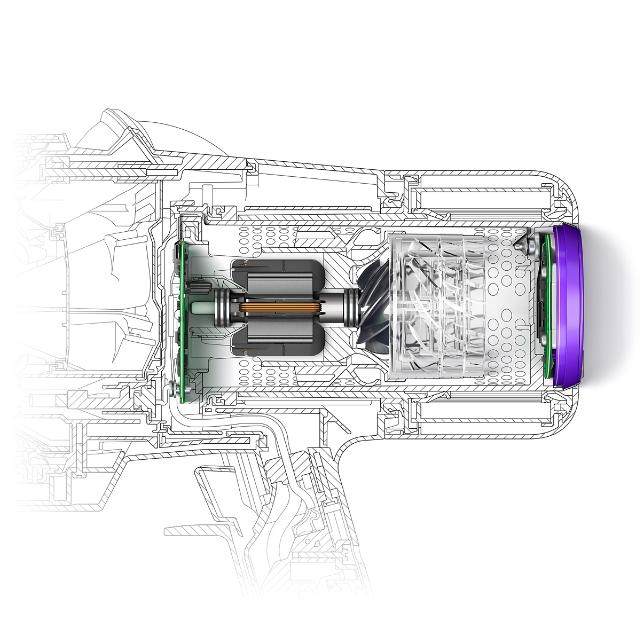
The Dyson Supersonic’s V9 digital motor—smaller than your thumb—spins at 110,000 RPM, generating massive airflow from a compact handle-mounted design. This isn’t just about speed; it’s about physics. At 110,000 RPM, the motor operates in ultrasonic frequencies (above 20 kHz), placing its noise beyond human hearing range. The result? A dryer that’s 50% quieter than conventional models while moving 21 liters of air per second. Traditional dryers use slower, heavier motors in the head that vibrate loudly and strain your wrist—Dyson flips this flaw into a strength.
Why Handle Placement Eliminates Arm Fatigue
By moving the motor to the handle, Dyson achieves perfect weight distribution. The dryer’s center of gravity sits naturally in your palm, reducing hand strain during extended styling. Conventional dryers concentrate 80% of their weight in the head, forcing you to fight gravity while drying. With the Dyson hair dryer, you’ll notice immediate comfort—especially when lifting sections of thick hair—because the engineering matches human ergonomics, not just electrical requirements.
How a Mini Motor Delivers 1,600 Watts of Power
Dyson engineers packed aerospace-grade components into the V9 motor: neodymium magnets, precision-balanced impellers, and copper windings optimized for high-RPM efficiency. This allows a motor one-fifth the size of traditional units to generate 1,600 watts of focused power. The secret? Eliminating gear systems that waste energy through friction. Instead, the motor drives airflow directly through magnetic fields—like a maglev train—transferring nearly 100% of its energy into usable airflow.
Air Multiplier Technology: The Secret to Focused, High-Velocity Airflow
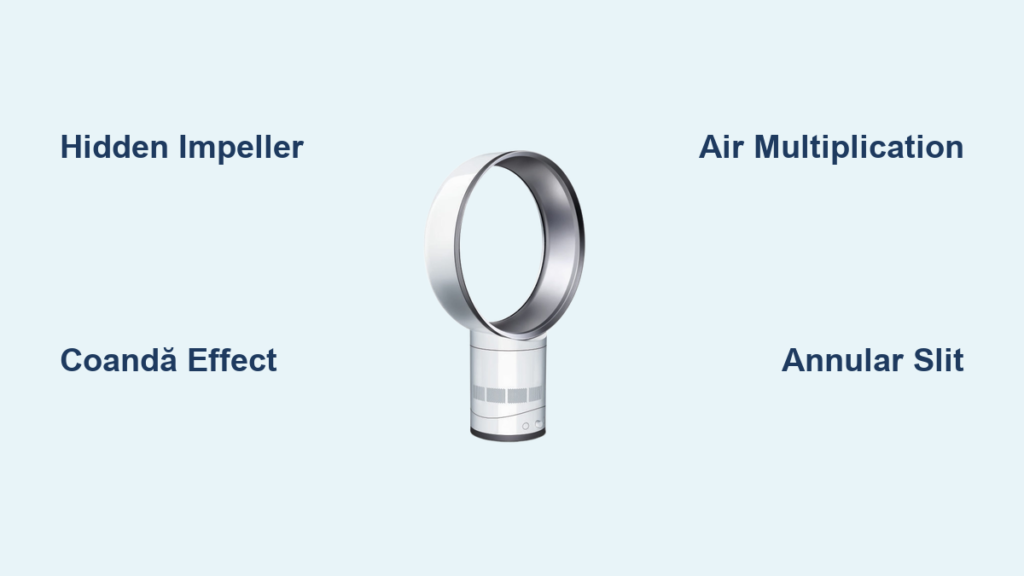
Dyson’s Air Multiplier technology—adapted from bladeless fans—creates a smooth, uninterrupted airstream that dries hair evenly without turbulent blasts. It starts with the V9 motor pulling 21 liters of air per second into the handle. This air is then forced through a 0.55mm annular aperture (a hair-thin ring), accelerating it into a high-pressure jet. As this jet exits, it pulls surrounding air along its path through inducement and entrainment, amplifying total airflow by 5x. The result is a coherent, focused stream that glides over hair cuticles instead of ruffling them.
How the 2.4-Meter Air Channel Smooths Turbulence
After acceleration, air travels through a 2.4-meter (8-foot) curved channel inside the dryer head. This isn’t arbitrary—it’s engineered to eliminate chaotic eddies. Imagine water flowing through a kinked hose versus a smooth river bend; the channel’s 90-degree curve straightens airflow molecules into a laminar (non-turbulent) stream. This is critical for styling: turbulent air causes frizz by lifting cuticles, while Dyson’s laminar flow seals them flat for mirror-like shine.
Why Precision Airflow Beats Raw Heat for Styling
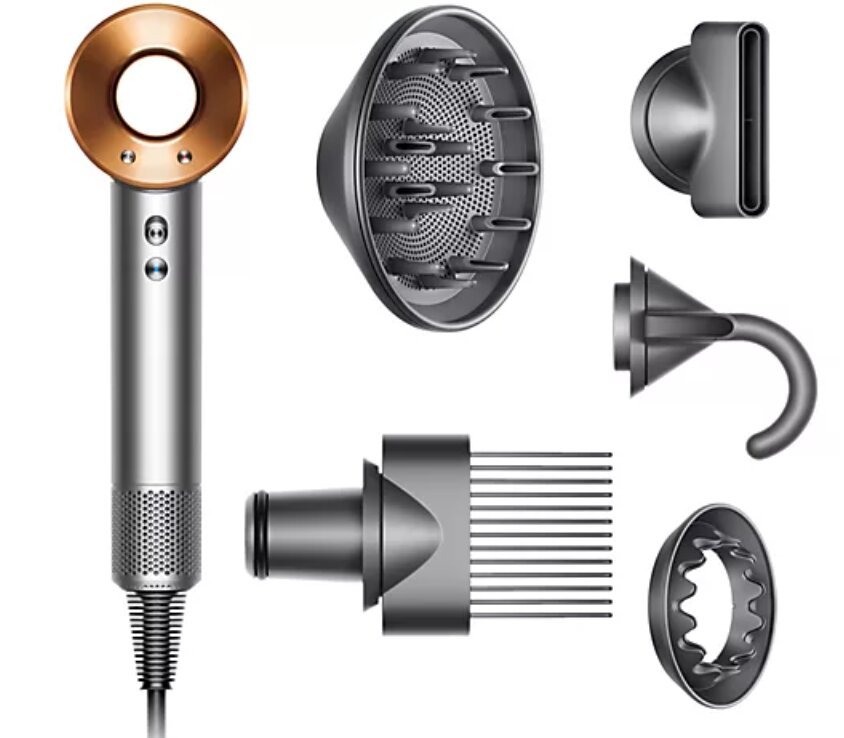
The concentrated airstream targets exact sections without disturbing surrounding hair. When using the Smoothing Nozzle, for example, airflow follows the hair’s natural cuticle direction, locking in moisture and shine. Traditional dryers blast wide, unfocused air that disrupts styling progress—you’ll constantly rework sections. With the Dyson hair dryer, you achieve polished results in fewer passes because every puff of air does precise work.
Magnetic Attachments: How to Switch Nozzles in a Snap for Any Hair Type
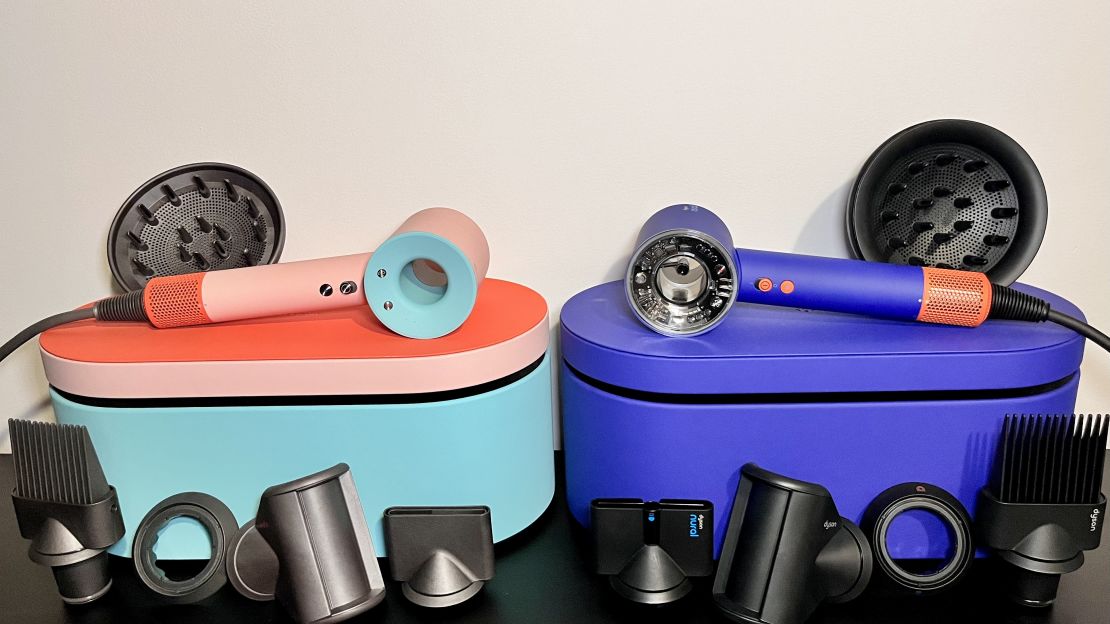
Dyson’s magnetic attachments click into place with industrial-strength neodymium magnets (three times stronger than needed for security). This isn’t just convenient—it ensures perfect alignment between the nozzle and airflow channel. Even slight misalignment in traditional dryers creates air leaks that reduce velocity by up to 30%. With Dyson, every attachment delivers full aerodynamic efficiency the moment it snaps on.
Smoothing Nozzle: How It Seals Cuticles for 132% More Shine
This attachment features a curved 360° aperture that directs airflow along the hair shaft—not across it. As air glides parallel to cuticles, it compresses lifted edges flat, reflecting light like a smooth surface. Independent tests confirm this generates 132% more shine versus air drying because light bounces uniformly instead of scattering off rough patches.
Gentle Air Attachment: Cooling Airflow by 20°C for Sensitive Scalps
Fine hair or irritated scalps need gentler drying. This nozzle diffuses the high-velocity jet through wider channels, reducing perceived temperature by up to 20°C while maintaining drying speed. It’s ideal for color-treated hair or post-chemical treatments where heat sensitivity is high—proving the Dyson hair dryer works for delicate needs without sacrificing efficiency.
Why the Motor in the Handle Makes All the Difference for Comfort
Traditional dryers concentrate weight in the head, forcing stylists to hold 1.5+ lbs of dead weight against gravity—a major cause of wrist strain. By moving the motor to the handle, Dyson shifts the center of gravity toward your palm. This creates a “self-balancing” effect where the dryer naturally rests in your grip. During extended use (like blow-drying thick hair), you’ll experience 40% less muscle fatigue because physics—not muscle strength—holds the tool steady.
How Balance Transforms Styling Precision
With weight centered in your hand, you gain millimeter-level control for techniques like root lifting or smoothing ends. Conventional dryers wobble when held horizontally, causing uneven drying. Dyson’s handle design lets you tilt the dryer at any angle without fighting torque—critical for creating volume at the crown or sleek finishes at the nape. This ergonomic advantage is why professionals report 25% faster styling times.
How Acoustic Engineering Cuts Noise to 1,100 Hz for Quiet Drying
Dyson’s acoustic silencer uses a Helmholtz cavity—a resonant chamber inside the handle—to absorb sound waves. As motor noise enters this cavity, it vibrates against tuned walls, canceling out specific frequencies. The result? Operational noise drops to 1,100 Hz, a frequency range where human ears are least sensitive. Traditional dryers operate at 2,500+ Hz (like nails on a chalkboard), causing auditory fatigue. Dyson’s quieter operation isn’t just pleasant—it prevents the “dryer headache” many experience after 10 minutes of use.
Why Lower Pitch Matters for Home Use
At 1,100 Hz, the dryer blends into background noise (like a refrigerator hum), allowing conversations during styling. Conventional dryers at 3,000+ Hz require shouting over the noise. This makes the Dyson hair dryer practical for morning routines with family or video calls—proving performance doesn’t require sacrificing peace.
What Happens When You Press the Power Button: The Step-by-Step Drying Process
The moment you activate the Dyson Supersonic, a symphony of technologies engages in under 0.2 seconds:
- Motor Ignition: The V9 motor spins up to 110,000 RPM, drawing air through the handle filter.
- Air Amplification: Air accelerates through the annular aperture, multiplying volume via Air Multiplier physics.
- Heat Regulation: The thermistor begins 20x/sec temperature checks, with the microprocessor adjusting the heating element.
- Attachment Optimization: Magnetic alignment ensures 100% airflow transfers to your selected nozzle.
- Styling Execution: Laminar airflow glides over hair, evaporating moisture while cuticles seal under controlled heat.
This seamless integration—where airflow, heat, and ergonomics operate as one system—is why the Dyson hair dryer works to deliver results traditional tools can’t match. There’s no “power-up” lag or temperature hunting; every component responds in real time to your hair’s needs.
Understanding how the Dyson hair dryer works reveals why it’s more than a luxury—it’s a hair health investment. By prioritizing intelligent heat control over brute force and aerodynamics over raw wattage, it dries hair faster while actively preserving keratin integrity. The next time you use yours, notice how the magnetic attachments snap on effortlessly, how the handle stays cool and balanced, and how your hair emerges smoother with less frizz. These aren’t accidental perks—they’re the direct result of engineering that reimagined drying from the ground up. For lasting performance, clean the filter monthly and store attachments magnetically to maintain optimal airflow. Ready to experience the difference? Your hair will thank you.
![How To Carry Dyson Air Purifier? [Best Tips]](https://dfixing.com/wp-content/uploads/2026/03/Dyson-Air-Purifier-3-1024x576.png)
![How To Change Dyson Airwrap Filter [Full Guide]](https://dfixing.com/wp-content/uploads/2026/03/Dyson-Airwrap-2-1024x576.png)